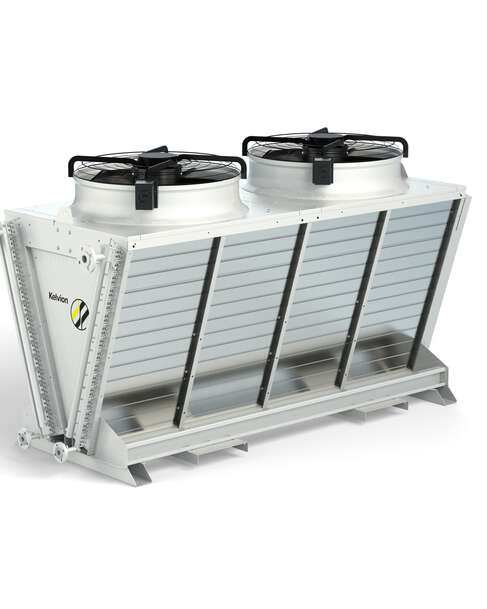
Mechanical cleaning of heat exchangers covers a wide range of measures to maintain performance and reliability. It includes internal cleaning – either on the tube side (carried out at the factory or directly on site) or on the housing side (at the factory).
Depending on the application, high-pressure cleaning or brush cleaning of the tube side is applied to remove deposits effectively. By cleaning both the inner and outer sides, the thermodynamic performance of the equipment can be significantly improved. This process not only optimises efficiency, but also contributes to corrosion protection, ensuring long-term durability and safe operation of your heat exchangers.
Key Service Solutions
Chemical cleaning is a highly effective method for removing deposits, scaling, and corrosion products from heat exchangers. The process uses specially formulated cleaning agents that circulate through the equipment to dissolve unwanted residues without causing damage to the base material.
Depending on the fouling type and material of the heat exchanger, different chemical solutions are applied, such as acidic, alkaline, or neutral detergents.
This method ensures thorough cleaning of even hard-to-reach areas inside the equipment, where mechanical methods may be limited.
Thermal Cleaning is the process of thermal decomposition of organic materials at elevated temperatures, in an inert atmosphere without access to oxygen.
This allows us to perform recoating to OEM specification again, extending the coolers life cycle.
Our cleaning machines ensure efficient maintenance of both shell & tube and air-cooled heat exchangers.
- For air-cooled exchangers, a pumping skid supplies water under pressure to the bundles, while a semi-automatic unit with manifold and spray nozzles cleans the finned surfaces. This process removes external fouling, safeguards performance, and reduces downtime.
- For shell & tube units, the system cleans the water side, removing chalk, rust, and corrosion products, and is suitable for copper-nickel alloys, stainless steel, titanium, and brass.