Quality and Flexibility
PLATE HEAT EXCHANGERS
Definition and purpose
WHAT ARE PLATE HEAT EXCHANGERS – AND HOW DO THEY WORK?
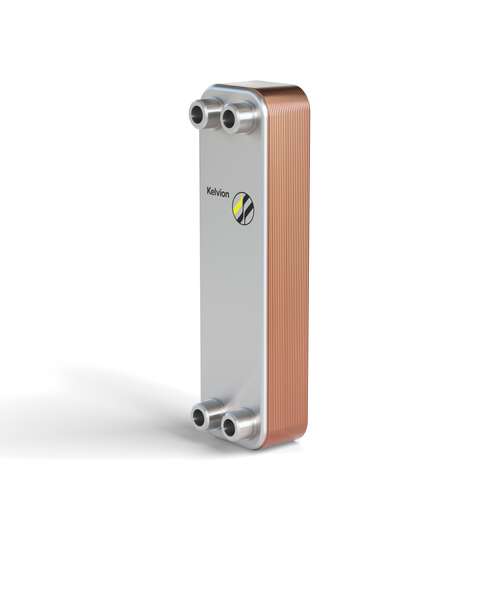
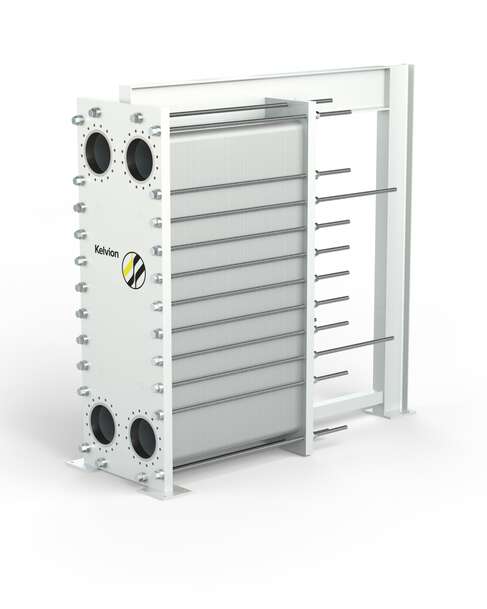
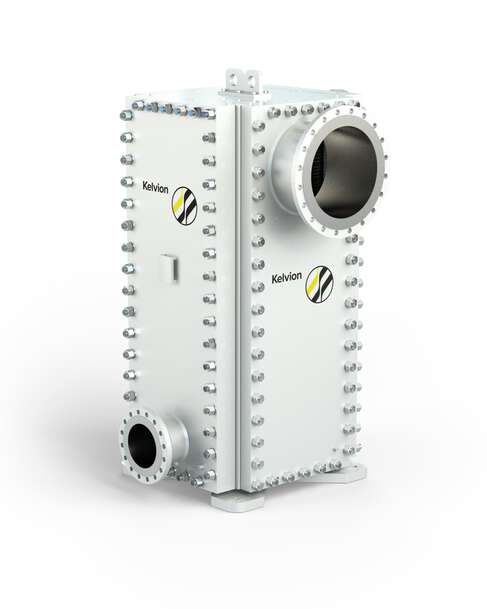
Plate heat exchangers transfer heat between two fluids that are separated by corrugated metal plates. They consist of multiple heat transfer plates that are either sealed with gaskets, brazed together, or fully welded.
The individual heat transfer plates are arranged in stacks, creating flow channels through which the hot and cold fluids flow in alternating patterns. This allows thermal energy to transfer efficiently from one fluid to the other. Keeping the two fluids completely separated is essential to prevent cross-contamination. When the two fluids flow in opposite directions, as is typically the case, the process is known as countercurrent flow. When they flow in the same direction, it is referred to as parallel flow. Some fully welded models can also operate using a cross-flow arrangement. Regardless of the configuration, the specially designed corrugation of the heat transfer plates creates highly turbulent flow, ensuring efficient heat transfer.
Design and application
HOW IS A PLATE HEAT EXCHANGER BUILT – AND WHERE IS IT USED?
In principle, all of our plate heat exchangers operate in a similar way. Depending on the intended application, they may differ in configuration, design, and materials. Brazed plate heat exchangers are compact and space-saving, making them particularly well suited for the HVAC and refrigeration industries. Gasketed plate heat exchangers can be flexibly adapted and expanded as needed to meet our customers' requirements. This is particularly important in the chemical, food and beverage, and marine industries. Welded plate heat exchangers, on the other hand, are designed to withstand high pressures and temperatures, making them ideal for oil and gas applications.
Additional examples of application areas include:
- heating technology, e.g., underfloor heating, solar systems, or domestic hot water (DHW) heating
- industry, e.g., power plants or mechanical engineering
- food technology, e.g., milk cooling or beer pasteurization
- refrigeration and cooling technology, e.g., as a condenser, evaporator, or superheater
Just ask us – we'll be happy to help you select the most suitable plate heat exchanger for your application or recommend the right service solution.