How Can Sustainable Heat Rejection Be Implemented at Mega-Scale?
As thermal loads in industrial plants and data centres continue to increase, heat rejection becomes a critical system-level challenge rather than a component-level decision. Questions around scalability, sustainability, airflow management and long-term operational stability arise long before a specific technology is selected. This article addresses the most relevant technical considerations for sustainable heat rejection at very large capacities and explains how engineered bay-based solutions such as MEGA-BAY® and GIGA-BAY® respond to these challenges.
Why Does Heat Rejection Become a System-Level Challenge at Large Scale?
A At small and medium capacities, heat rejection can often be addressed by selecting individual dry coolers, cooling towers or air-cooled chillers and arranging them modularly. As thermal duties move into the multi-megawatt range, this approach increasingly reaches its limits. The cumulative effects of airflow interaction, electrical demand, acoustic emissions and structural loading begin to dominate system behaviour.
At large scale, heat rejection systems must operate continuously under base-load conditions, often with limited tolerance for temperature excursions. Redundancy concepts become more complex, footprint constraints tighten and airflow patterns extend beyond the boundaries of individual units. At this point, heat rejection can no longer be treated as a collection of independent devices; it must be designed as an integrated infrastructure element.
This shift from component-level selection to system-level engineering is the primary driver behind bay-based heat rejection concepts.
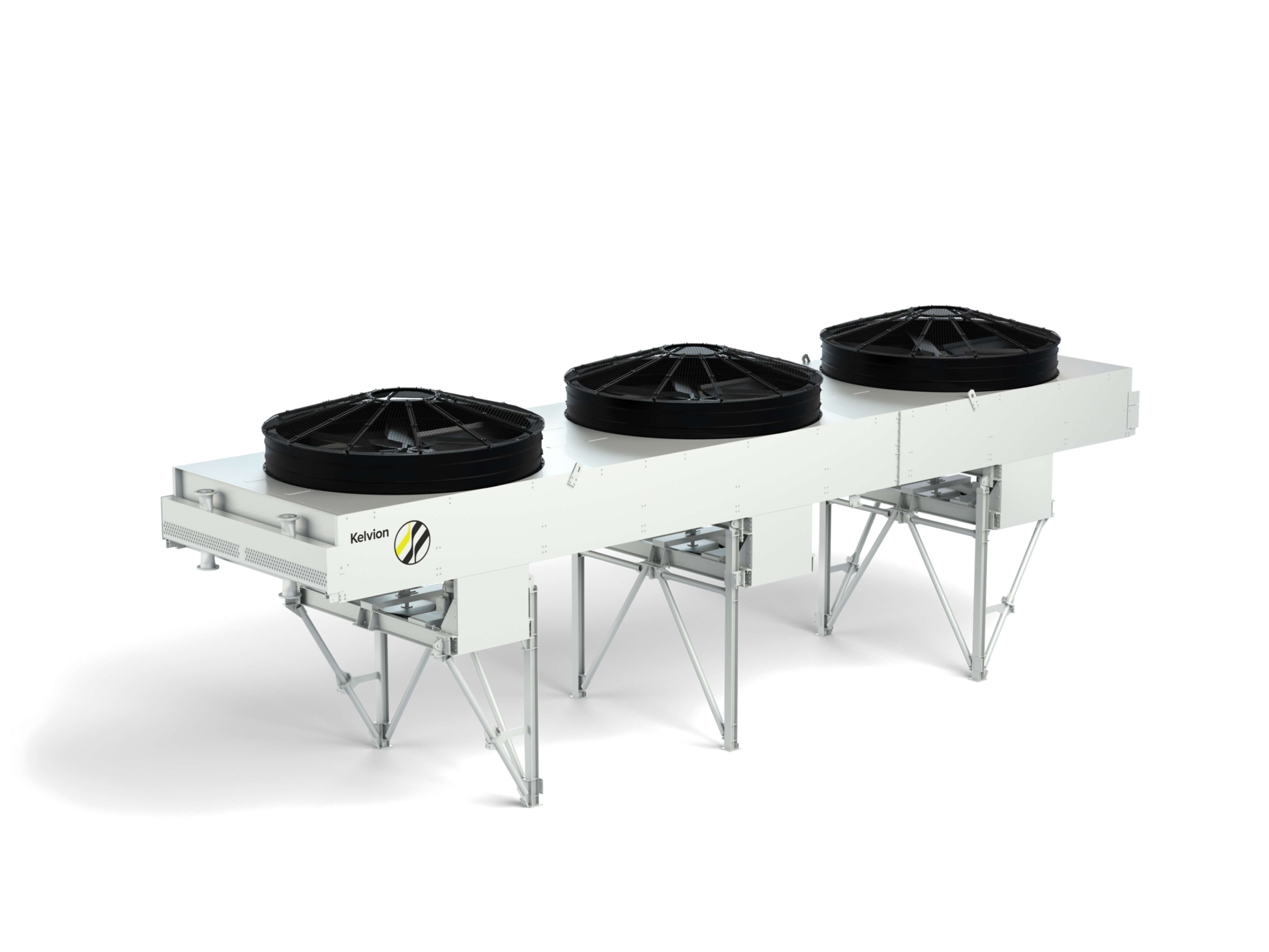
What Defines a Heat Rejection System at Mega-Scale?
A large-scale heat rejection system is defined not only by its installed thermal capacity, but by how consistently that capacity can be delivered under real operating conditions. Ambient variability, part-load operation and long-term degradation all influence usable performance.
Key characteristics of mega-scale heat rejection systems include:
- predictable thermal behaviour at design and off-design conditions
- controlled airflow paths across large cross-sectional areas
- minimised hot-air recirculation at both unit and site level
- optimised electrical power density
- clear redundancy and availability concepts
- long-term mechanical stability and serviceability
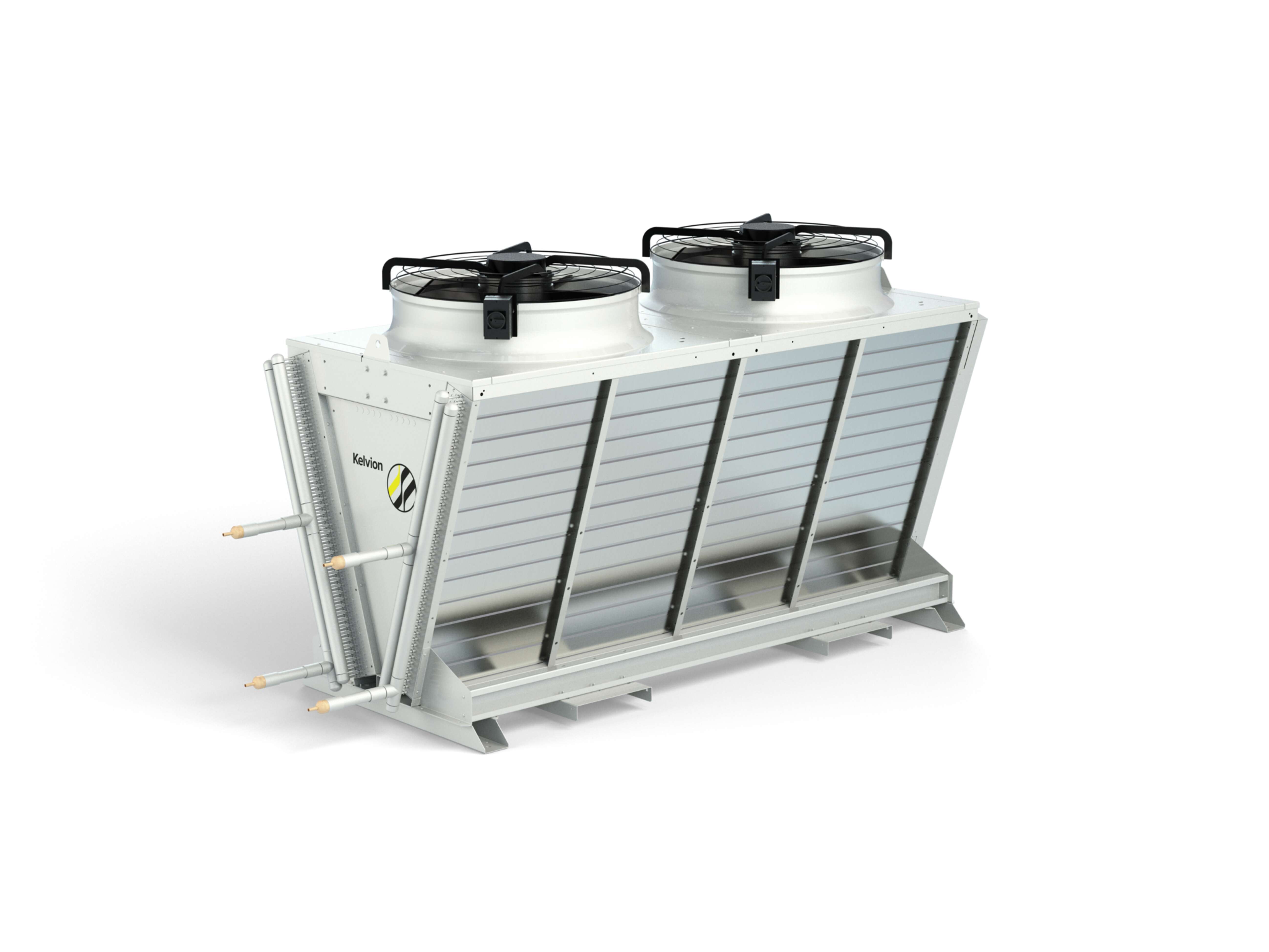
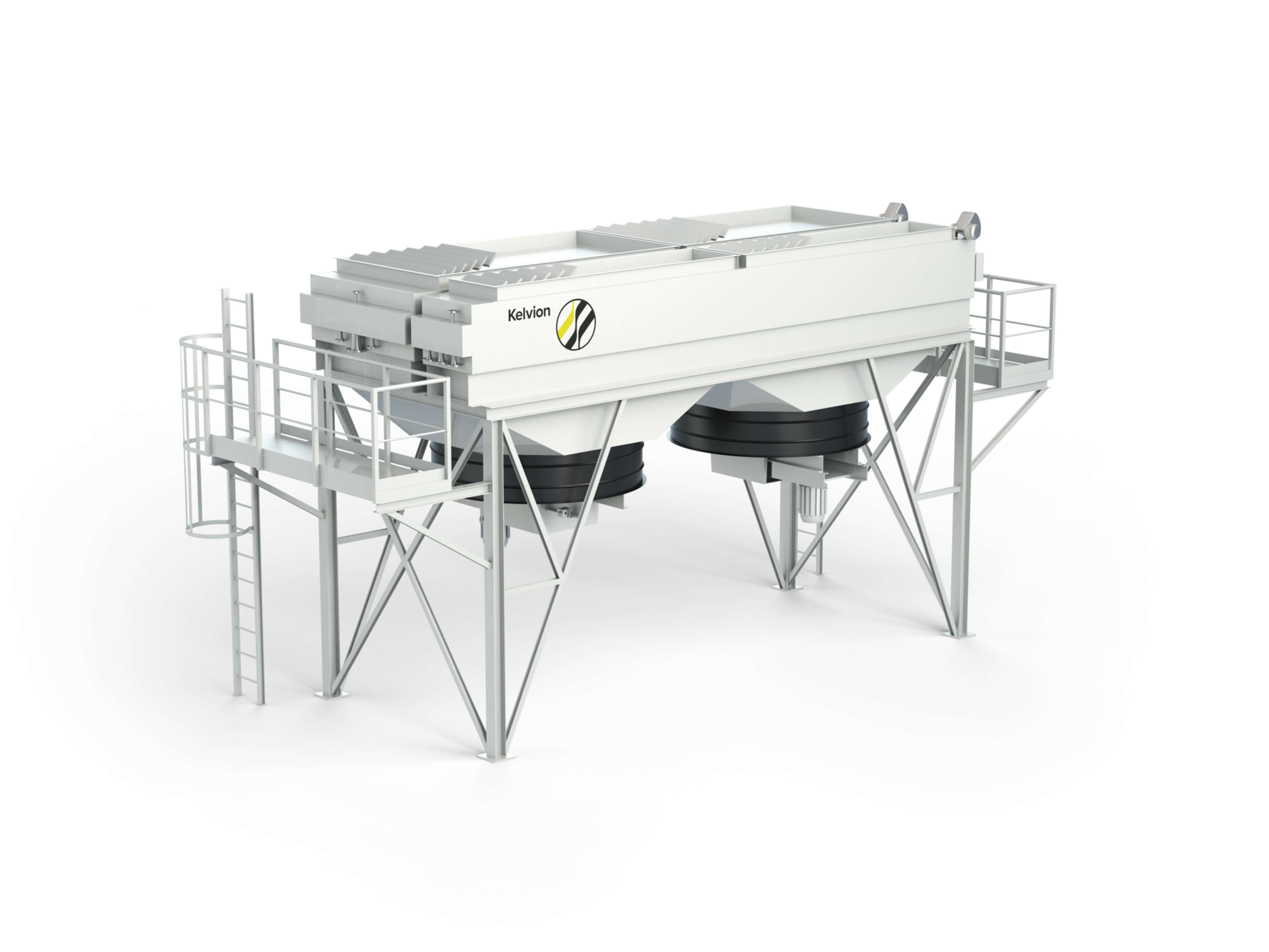
Bay-based solutions such as MEGA-BAY® and GIGA-BAY® address these requirements by treating heat rejection as a distributed airflow system rather than a series of isolated heat exchangers.
How Do MEGA-BAY® and GIGA-BAY® Address These Challenges?
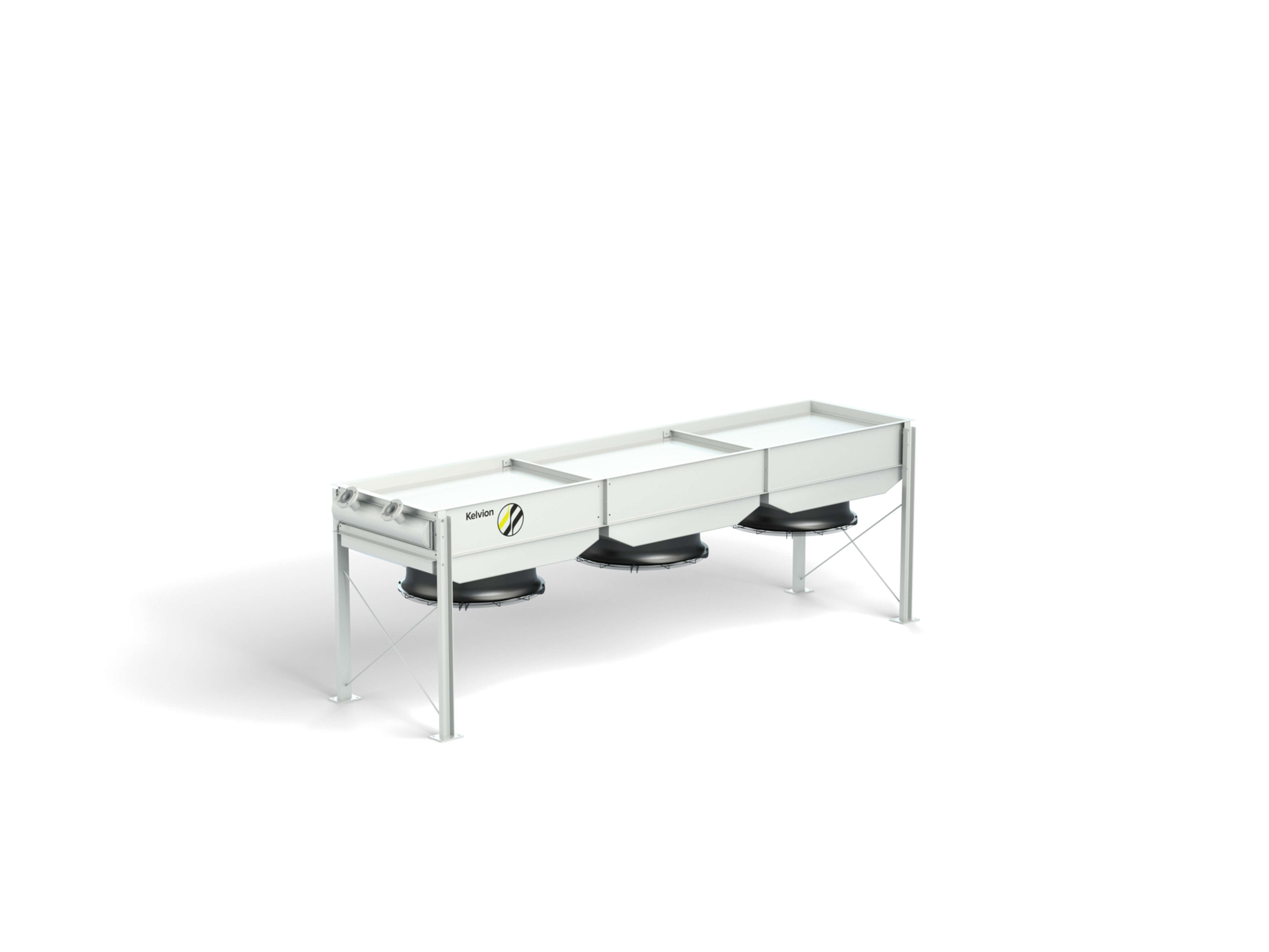
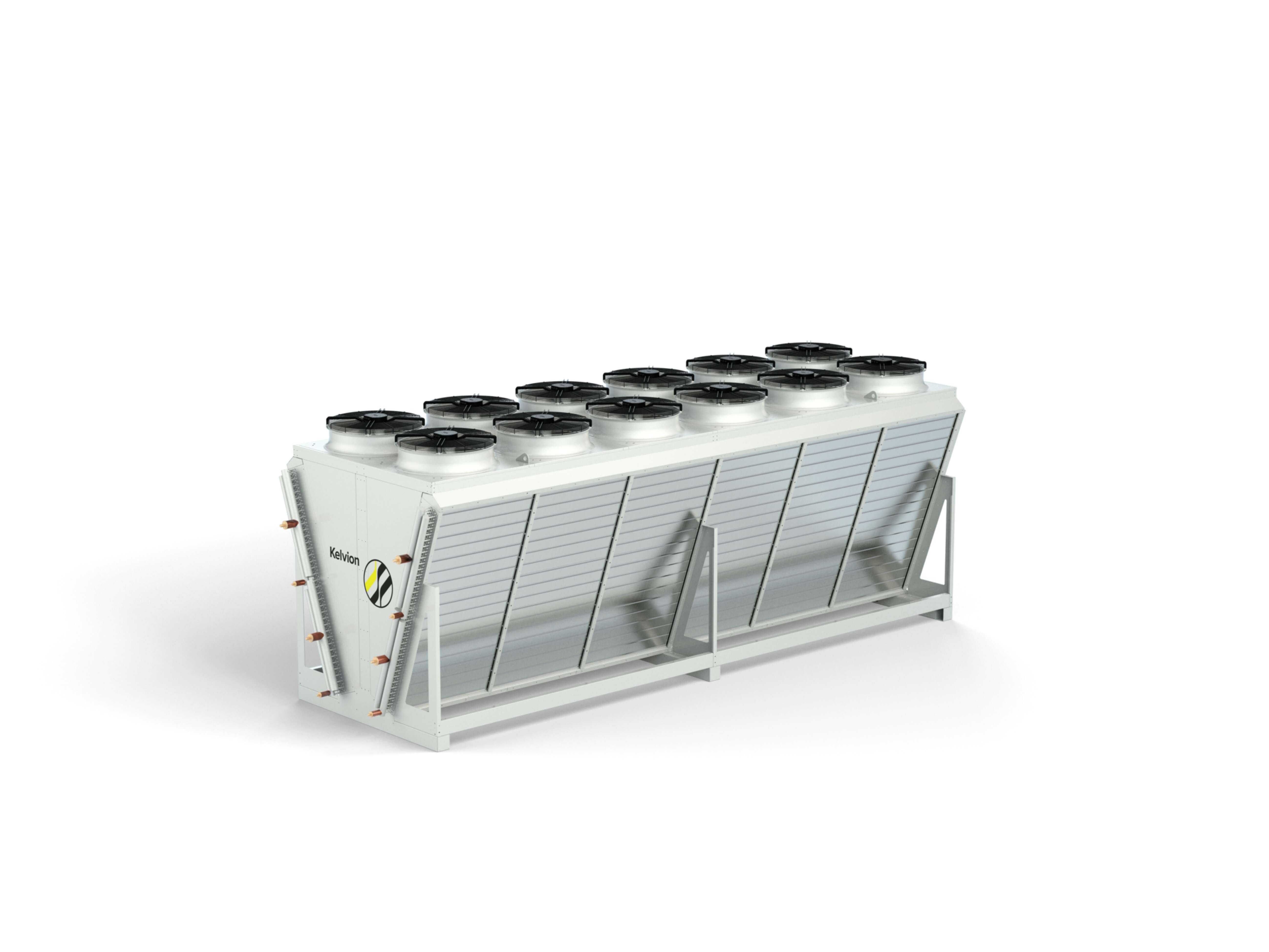
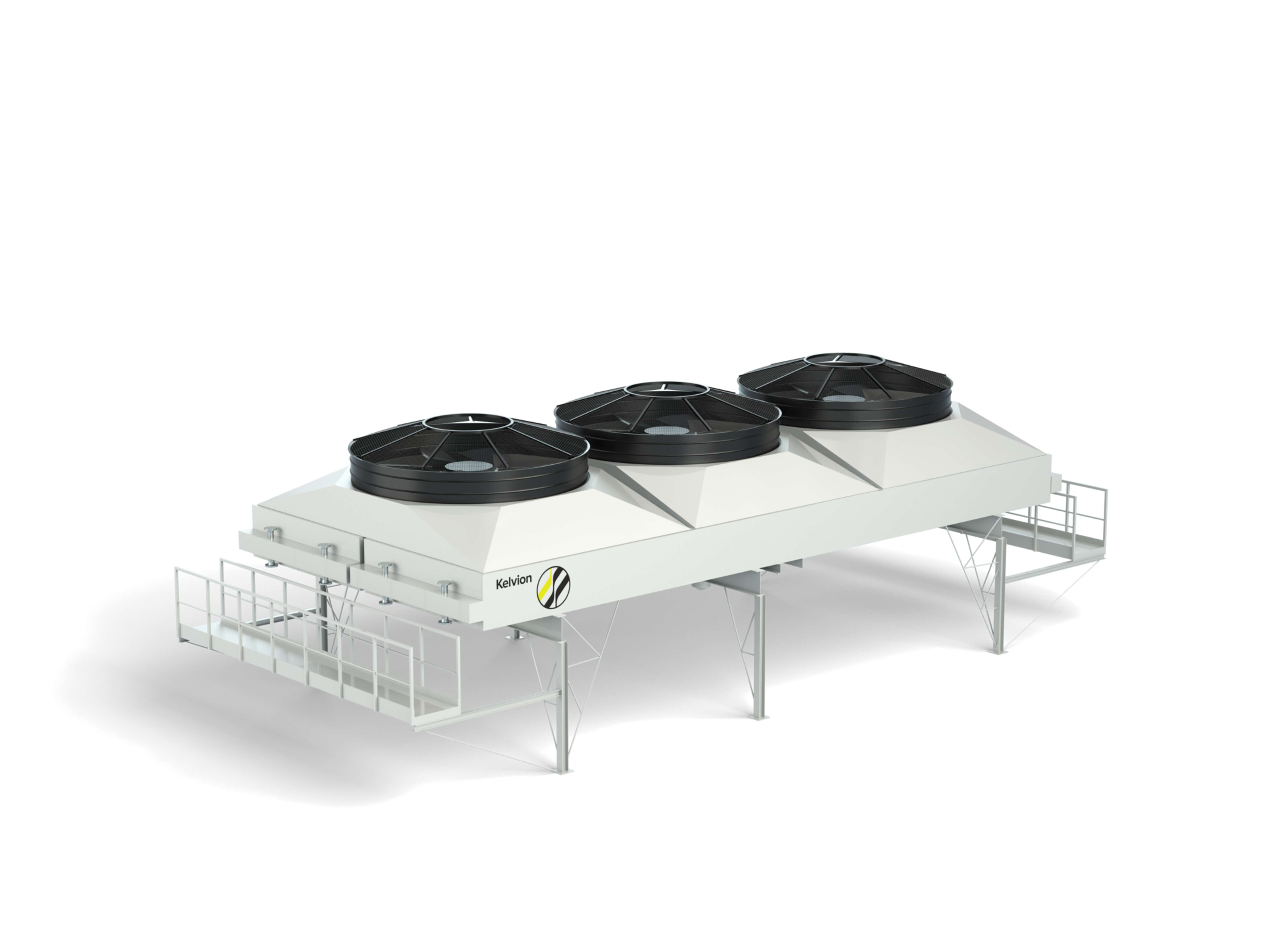
MEGA-BAY® and GIGA-BAY® are designed as engineered heat rejection platforms for very large capacities. Instead of scaling by repetition of standard units, the bay concept consolidates heat rejection into large, purpose-designed structures with defined airflow geometry and integrated fan arrays.
This approach enables:
- uniform air distribution across extensive coil surfaces
- reduced fan-specific loading and improved efficiency
- lower sensitivity to recirculation effects
- fewer mechanical and electrical interfaces
- simplified system-level control
By concentrating heat rejection into engineered bays, thermal performance becomes more predictable, and system losses associated with fragmented layouts are reduced.
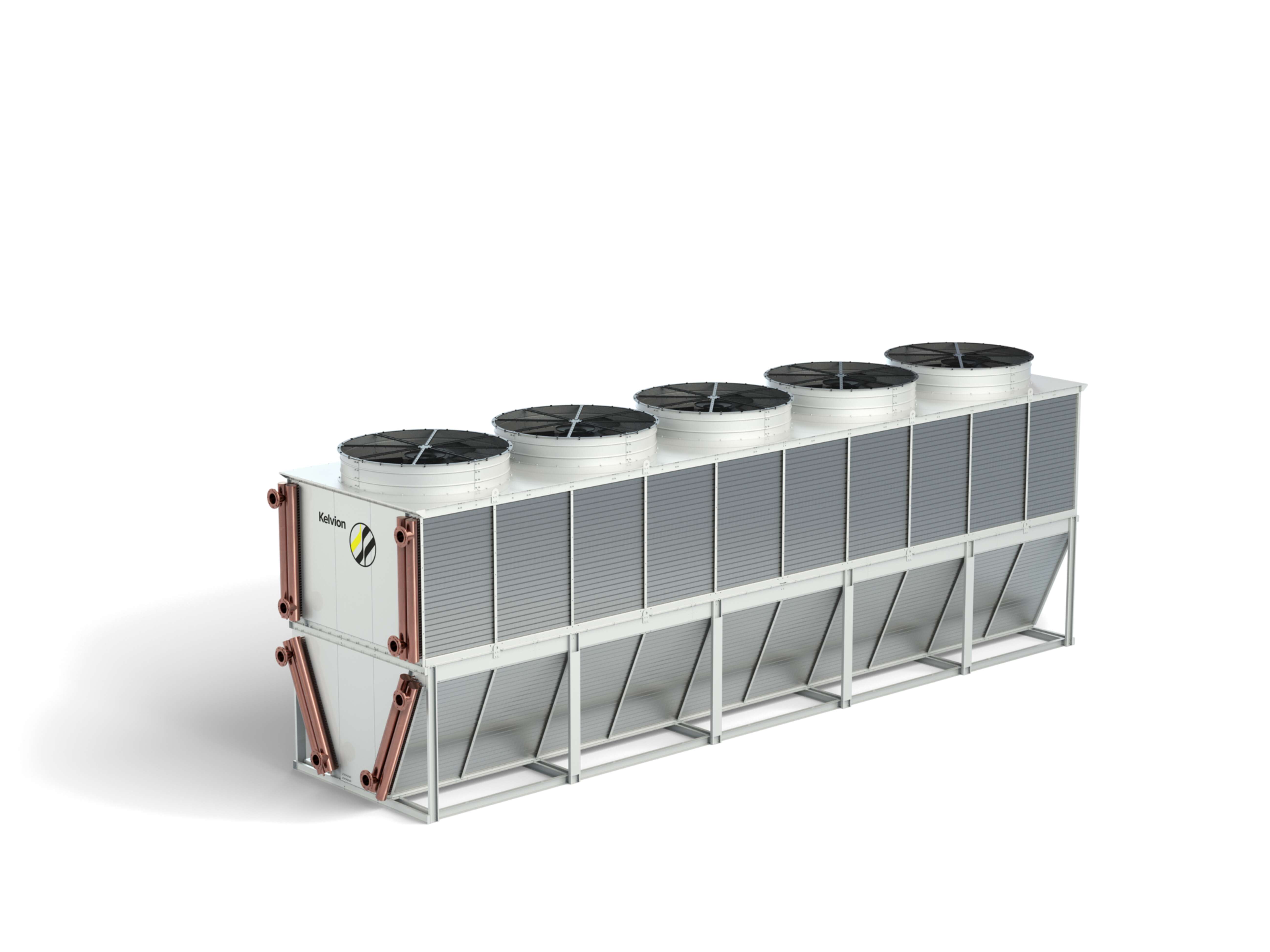
Scaling heat rejection capacity is not a linear process. Increasing thermal load affects air velocity requirements, fan power consumption, acoustic behaviour and structural demands. Beyond a certain threshold, simply adding more standard units leads to diminishing returns and rising system inefficiencies.
Bay-based systems scale capacity by expanding airflow cross-section rather than increasing air velocity. This allows high heat rejection capacity to be achieved while maintaining acceptable fan speeds, noise levels and electrical efficiency. The result is a more favourable balance between installed capacity and usable performance under peak ambient conditions.
This makes MEGA-BAY® and GIGA-BAY® particularly suitable for applications with sustained high base loads, such as hyperscale data centres, large industrial complexes or energy-intensive process facilities.
At an early project stage, heat rejection is often estimated using simplified calculation methods or preliminary tools such as heat rejection calculators. These approaches provide a first-order indication of required capacity but are insufficient for final system design at large scale.
Accurate heat rejection design must consider:
- total heat load and load distribution over time
- supply and return temperature levels
- allowable temperature approach to ambient air
- site-specific design dry-bulb temperatures
- redundancy and availability requirements
- seasonal and diurnal operating profiles
At mega-scale, detailed thermal modelling and airflow simulations are required to translate nominal capacity into guaranteed performance. Electrical load analysis and structural integration are equally important to ensure that theoretical capacity can be realised in operation.
Sustainability in data centre heat rejection is often associated solely with water savings. While water-free operation is a fundamental advantage of air-based systems, sustainability at large scale extends further.
Key sustainability aspects include:
- elimination of cooling water consumption and chemical treatment
- reduced operational risk related to water availability
- lower specific power consumption through efficient airflow management
- predictable long-term performance with minimal degradation
- simplified maintenance and reduced unplanned interventions
At very large capacities, these factors directly influence environmental footprint, operating expenditure and asset resilience over decades of operation.
How Are MEGA-BAY® and GIGA-BAY® Integrated into Site Infrastructure?
Large-scale heat rejection systems must integrate seamlessly into overall site infrastructure. This includes coordination with electrical distribution, structural design, access logistics and control architecture.
Bay-based systems are typically implemented as centralised heat rejection assets serving multiple cooling circuits or process loops. Their geometry supports controlled airflow separation from surrounding equipment, predictable acoustic behaviour and clearly defined maintenance zones.
Phased expansion can be accommodated by extending bay structures without disrupting existing operations, making these systems suitable for facilities with long-term growth strategies.
FAQ – Large-Scale Heat Rejection
When thermal loads reach levels where airflow interaction, power density and footprint constraints dominate system behaviour, bay-based concepts provide a more predictable and efficient solution than distributed standard units.
They are engineered as system platforms with controlled airflow geometry, rather than scaled-up individual units. This reduces system losses and improves performance predictability at large capacities.
Yes. Their scalability, water-free operation and stable thermal behaviour make them well suited for hyperscale and high-availability data centre environments.
With proper material selection, corrosion protection and regular maintenance, modern Air Fin Coolers can achieve service lifetimes of 20 to 25 years or longer. Factors such as ambient conditions, operating cycles and cleaning frequency influence this lifespan. Routine inspections of fin integrity, fan bearings and tube connections help detect early signs of wear. When combined with predictive maintenance tools and modular component replacement, downtime can be reduced to a minimum.