What is a Dry Cooler and how does it work?
Dry Coolers are essential components in industrial utilities, HVAC systems and process cooling environments where stable, water-free heat rejection is required. As closed-loop air-cooled heat exchangers, they operate independently of water treatment, make-up requirements or evaporation losses. Their consistent thermal behaviour across a broad operating envelope makes them a reliable solution for modern thermal management challenges in plants, buildings and high-density technical infrastructure.
Role of Dry Coolers in Industrial and HVAC Applications
Dry Coolers support a wide range of applications, from process fluid cooling in chemical and manufacturing plants to building services and high-capacity HVAC installations. They provide heat rejection for oil circuits, compressors, distillation processes, power electronics, data-centre equipment and chilled-water or heat-pump systems.
In HVAC use, Dry Coolers commonly serve as the heat-rejection component in chilled-water loops, free-cooling circuits or hybrid configurations combining mechanical and ambient-driven cooling. Their performance influences COP, part-load efficiency and system stability.
Because Dry Coolers operate independently of water availability and quality, they avoid chemical treatment, blowdown, plume formation and microbiological risks—key advantages in regions with limited water resources or strict environmental requirements.
How a Dry Cooler Works
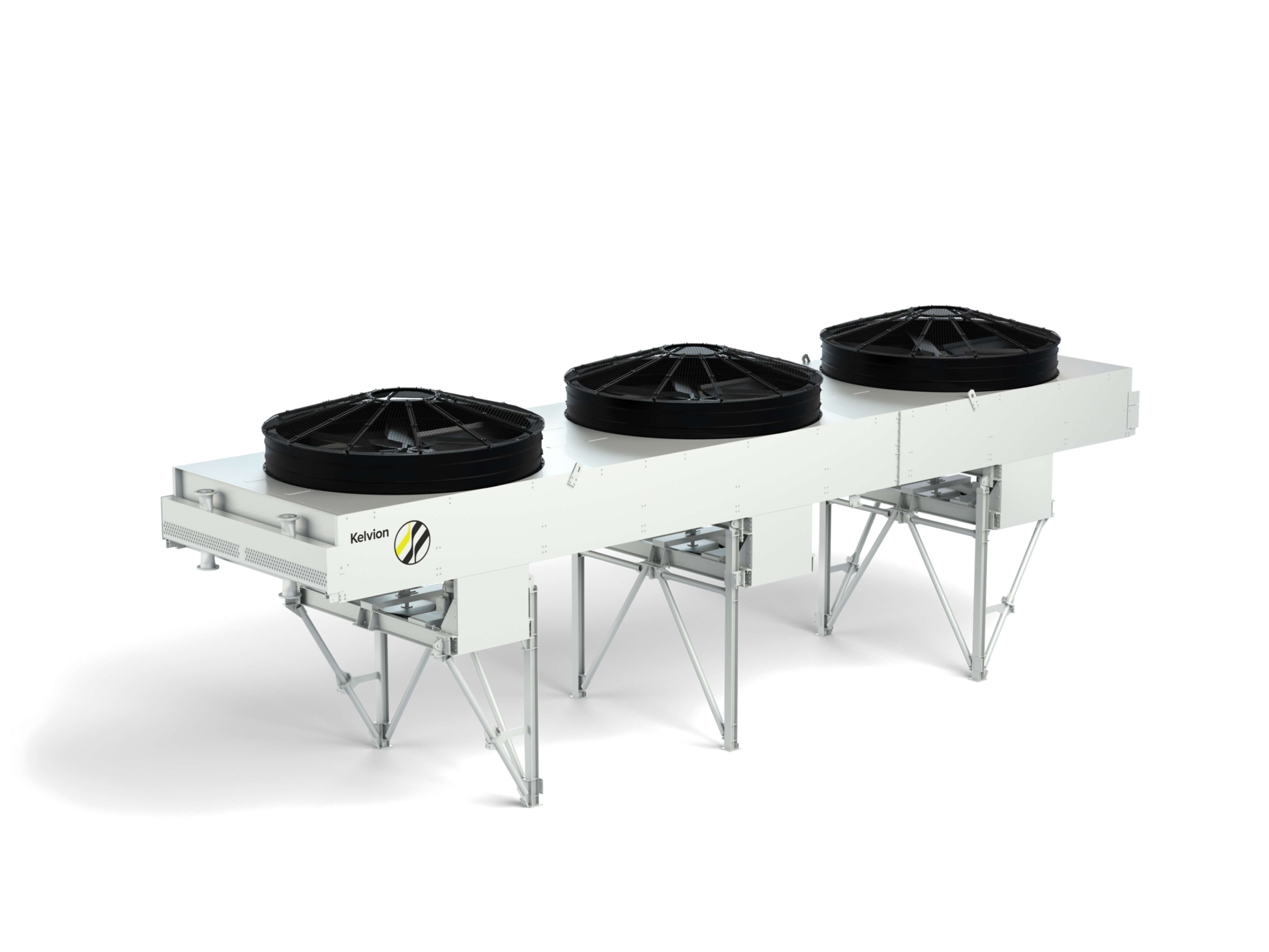
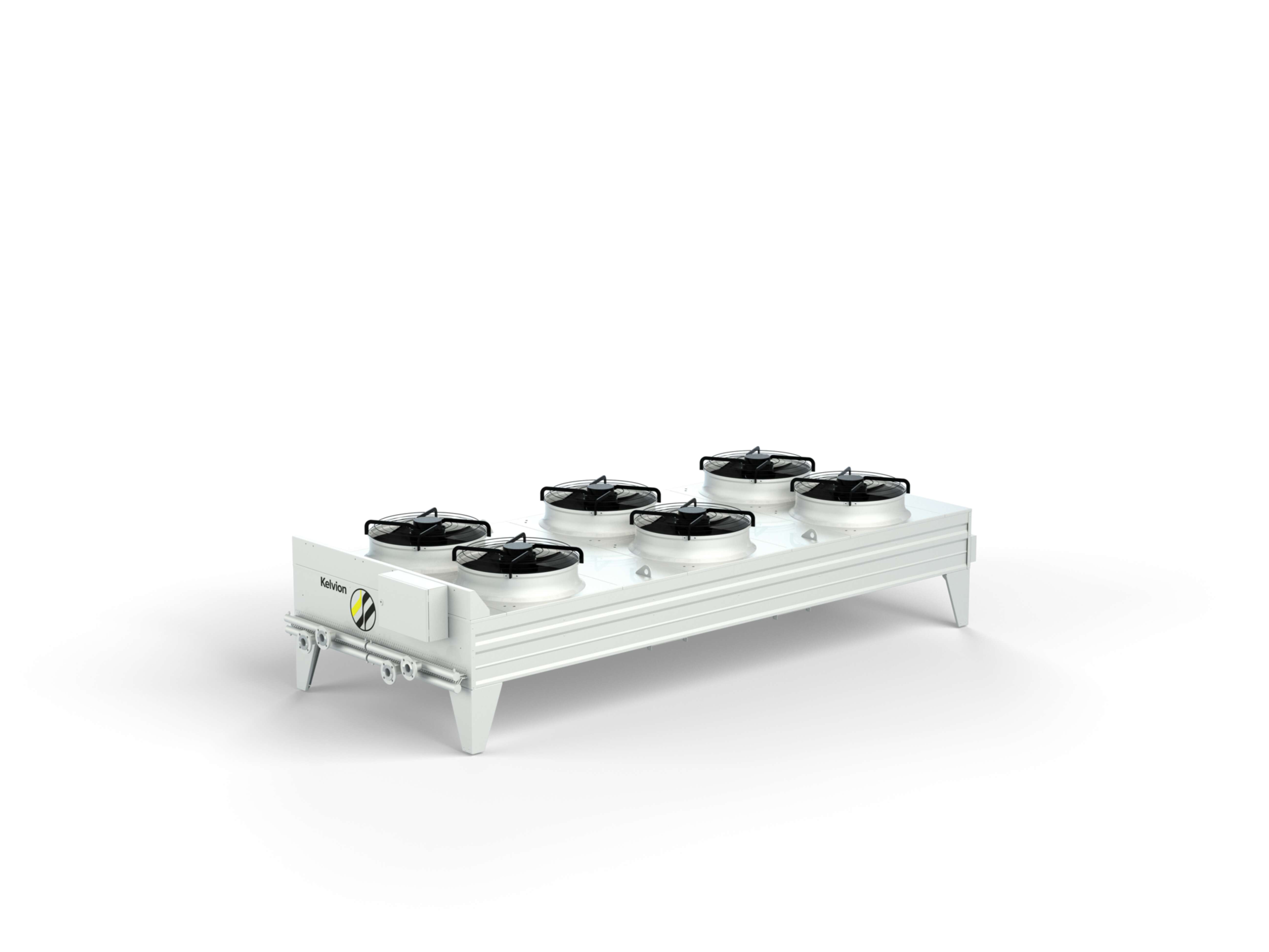
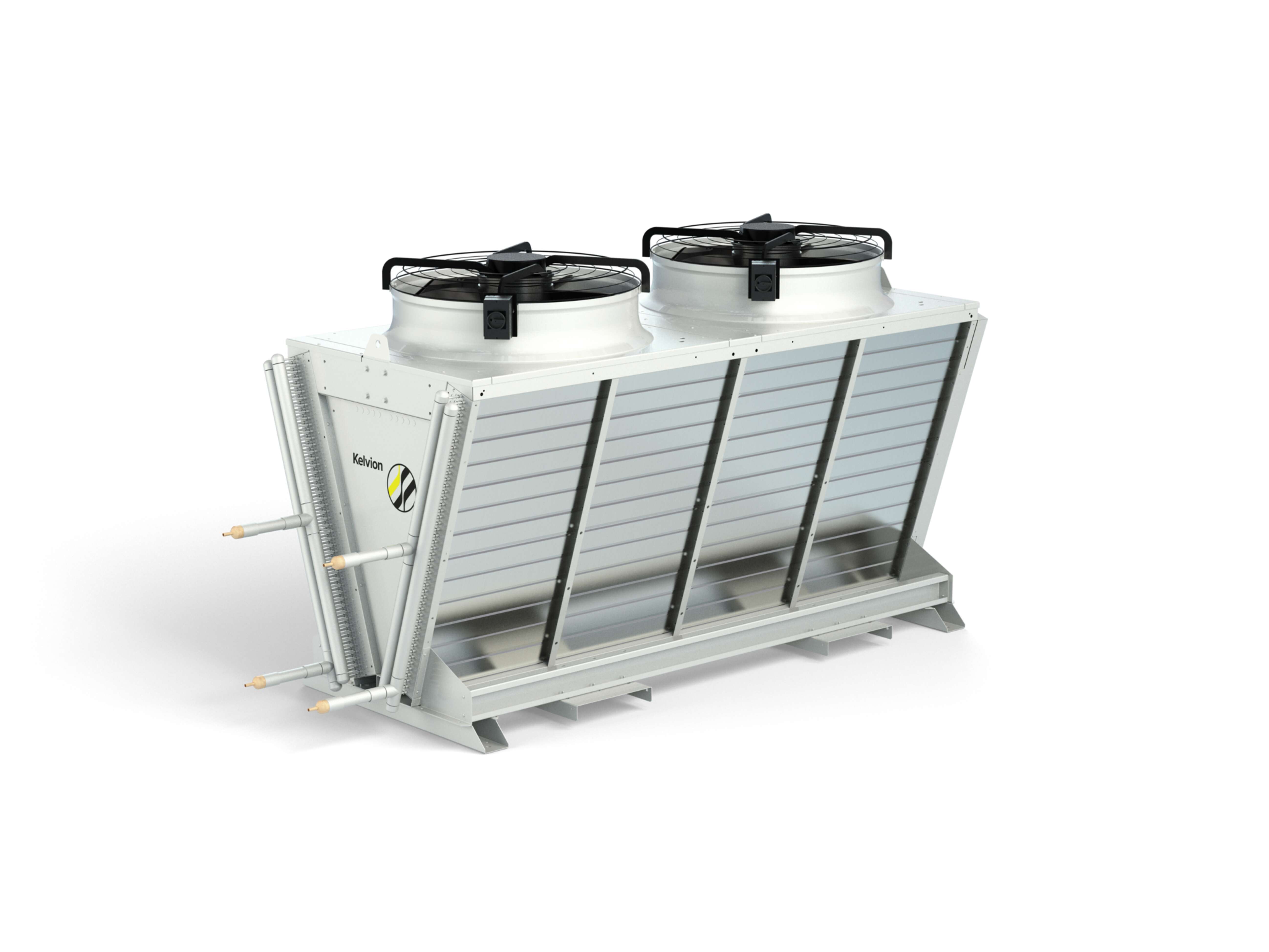
A Dry Cooler is a closed-circuit air-cooled heat exchanger. The process fluid circulates through finned-tube coils, while fans generate airflow across the fin surfaces to remove heat. No evaporation takes place; heat is carried away by forced convection.
The fundamental operating cycle involves:
- heat pickup from the load (e.g., chillers, compressors, process equipment)
- heat transfer inside finned tubes
- heat rejection to ambient air
- return of cooled fluid to the load
Because the fluid remains sealed within the system, fluid quality and composition remain important for glycol circuits, specialty fluids and sensitive process environments.
Forced-draft and induced-draft designs:
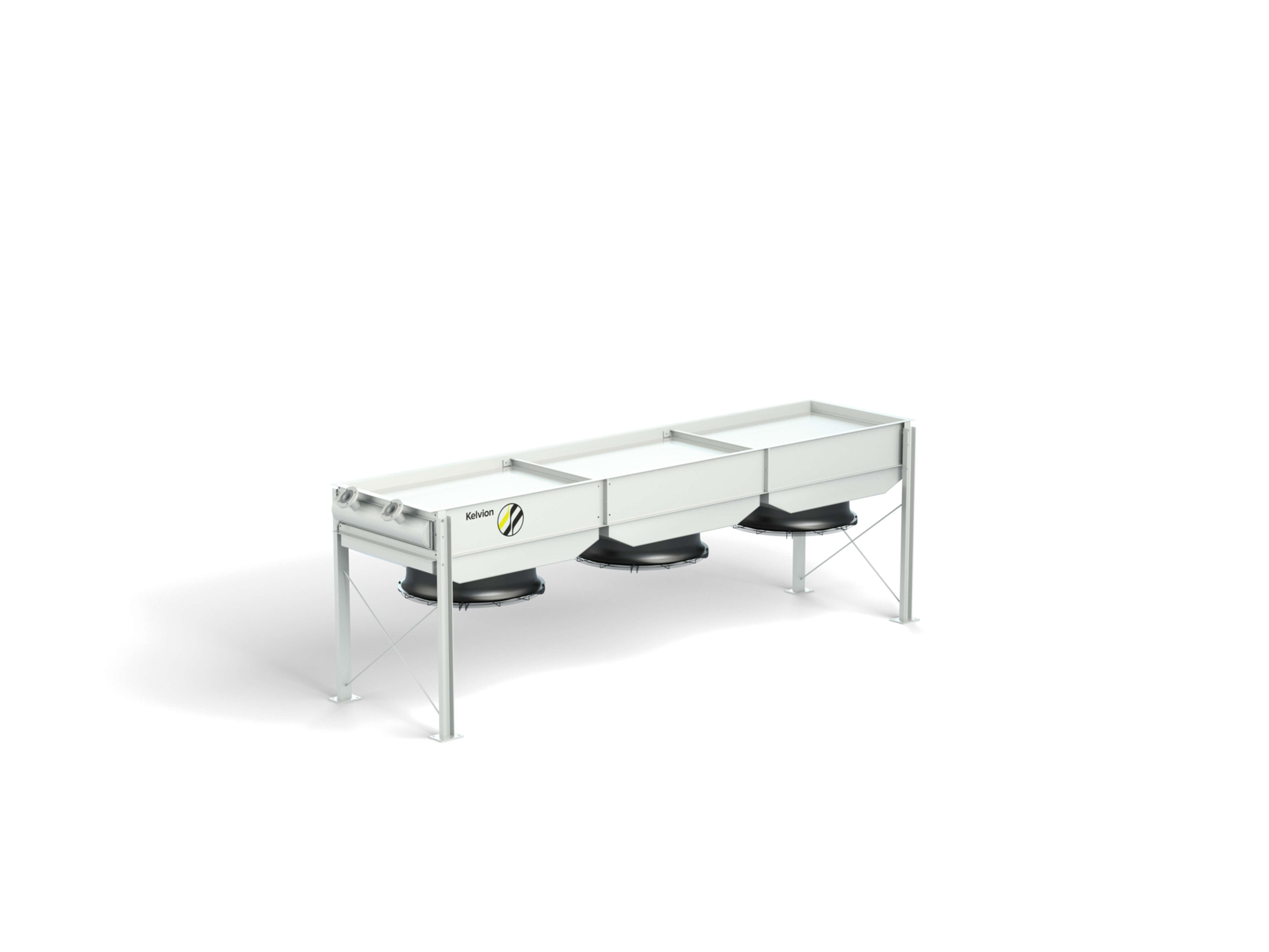
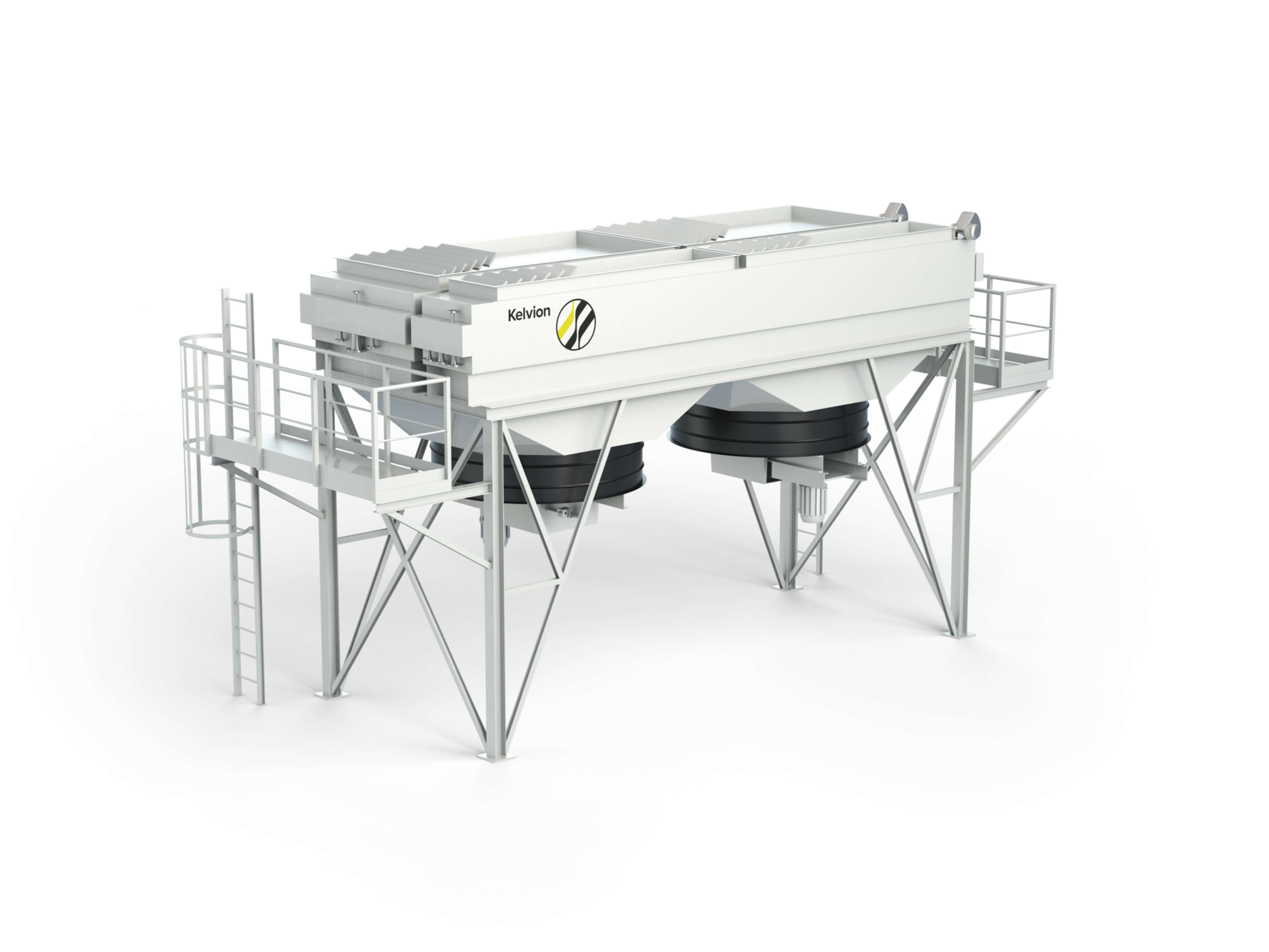
- Forced-draft units push air through the coil and offer accessibility for fan maintenance.
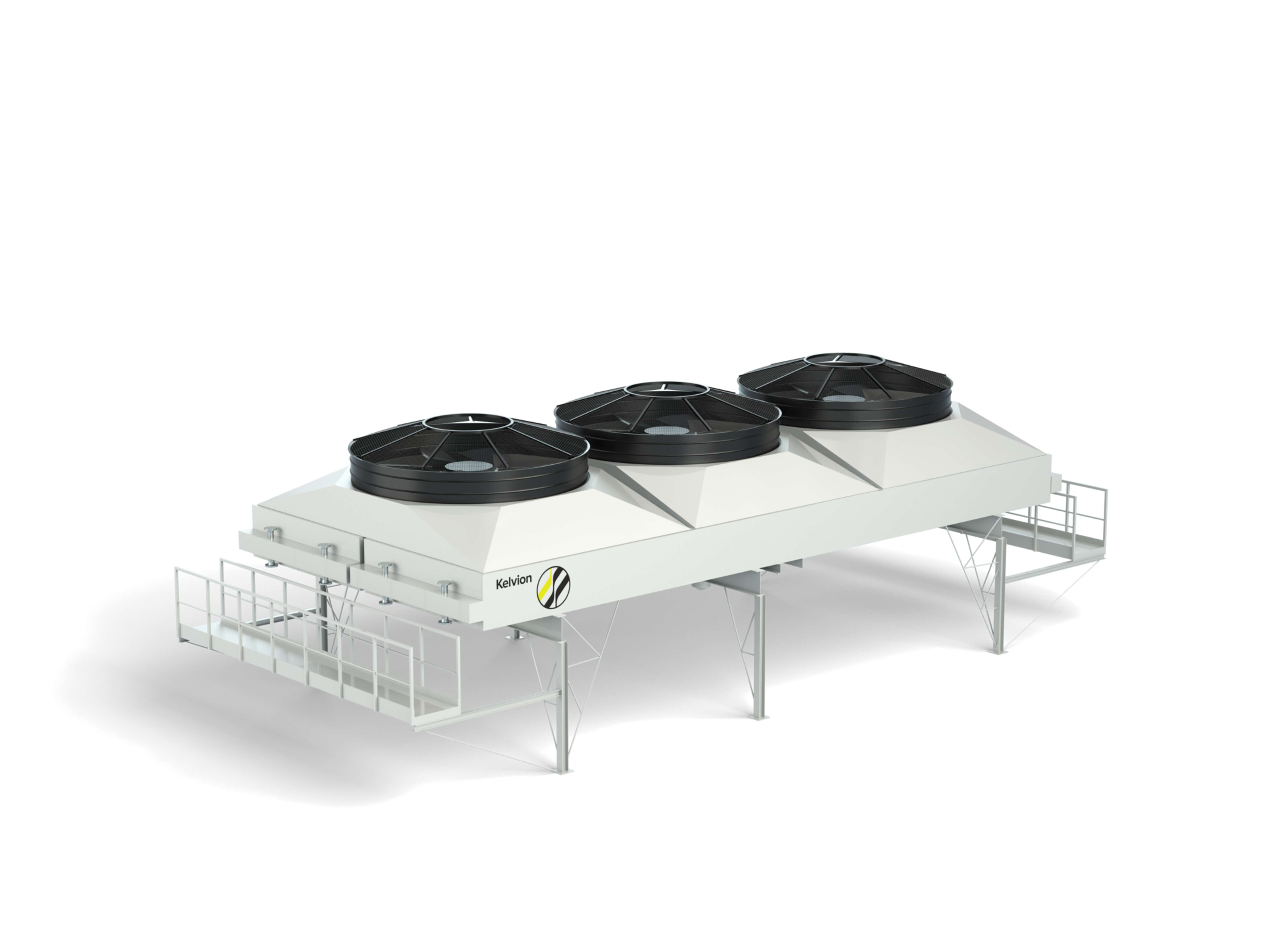
- Induced-draft designs pull air across the coil, improving airflow uniformity and reducing recirculation risk.
Horizontal and V-type configurations – Dry Coolers are typically available as:
- Horizontal flat-bed units, commonly used in industrial settings
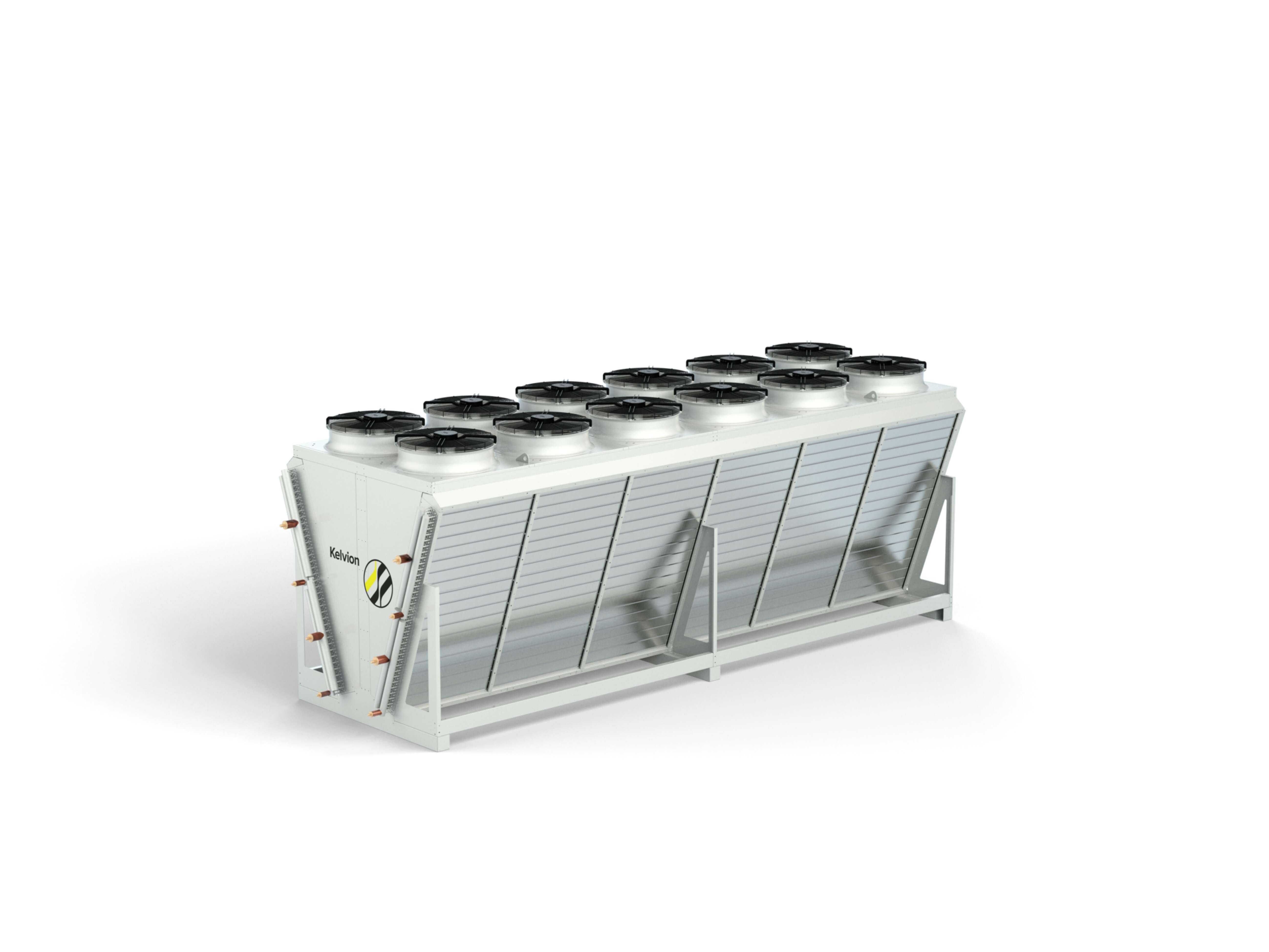
- V-type (A-frame)units, which provide high surface area per footprint and favourable fan-efficiency characteristics
Design Considerations for Dry Cooler Systems
The design of a Dry Cooler must align with the required thermal load, ambient conditions and overall system architecture. Engineers consider fluid characteristics, fouling tendencies, acceptable pressure drop, noise limits and potential redundancy requirements.
Central design parameters include:
- required heat-rejection capacity
- approach temperature to ambient air
- fluid viscosity and thermal stability
- fin geometry and coil construction
- fan selection, arrangement and expected power demand
- local noise constraints
- expected fouling intensity
- structural demands (wind, snow, seismic)
High ambient temperatures tighten the thermal approach and may require increased coil surface area, higher fan speeds or hybrid solutions such as adiabatic pre-cooling. In corrosive or industrial environments, protective coatings or alternative materials for coils and fins are used to maintain performance across the lifecycle.
System Integration and Operating Modes
Dry Coolers rarely operate as standalone units; they are integrated into complex thermal networks. Their role may include:
- substitution of water-cooled condensers in chiller systems
- provision of free cooling (direct or indirect)
- integration in hybrid chiller–heat pump systems
- cooling of closed-loop process circuits
- heat rejection for industrial power electronics or reactors
- high-efficiency seasonal cooling in building services
Control strategies are essential. Sensors track fluid temperatures, ambient conditions and differential pressures. Fan-speed modulation, valve control, bypass loops and staged bay operation stabilise outlet temperatures. Advanced EC-fan control allows precise modulation across the entire load range.
During winter or cooler seasons, Dry Coolers may cover the full cooling duty through ambient-driven heat rejection, significantly reducing chiller runtimes and operating costs.
Efficiency, Control and Airflow Management
Fan energy consumption heavily influences the operating cost of a Dry Cooler. Efficiency optimisation focuses on improving airflow behaviour, minimising recirculation and using advanced fan technology.
Acoustic considerations
Noise limits influence fan type, blade geometry, fin spacing and control strategy. Refined aerodynamic designs reduce turbulence-induced noise without compromising thermal performance.
- Induced-draft configurations for uniform airflow
- EC fans with full-range speed modulation
- multi-zone or bay-level control for load distribution
- careful placement to avoid recirculation from adjacent structures
- Seasonal conditions strongly affect performance.
- At low ambient temperatures: high capacity at minimal fan speed
- Under peak conditions: high-speed or hybrid cooling modes maintain design performance
- In transitional seasons: free cooling dominates, reducing compressor hours and OPEX
Maintenance and Reliability
Although Dry Coolers require less maintenance than evaporative systems, their performance depends on predictable inspection routines and environmental cleanliness.
Maintenance priorities include:
- removal of airborne debris from fin surfaces
- periodic inspection of fan blades, motors and bearings
- electrical checks and verification of control systems
- monitoring for recirculation, vibration or structural fatigue
- integrity checks of the coil and connections
- regular validation of performance vs. design
Air-side fouling – dust, pollen, industrial particulates – reduces airflow and heat-transfer capability. Its impact is operationally significant, especially in industrial zones. Cleaning frequency must reflect the ambient environment and process requirements.
For mission-critical applications such as data centres or semiconductor cooling, Dry Coolers are often configured with N+1 or 2N redundancy, ensuring uninterrupted thermal control even during maintenance or component replacement.
FAQ: Dry Cooler Design and Operation
A closed-loop air-cooled heat exchanger that rejects heat to ambient air without evaporation or water consumption.
A dry air cooler is the same concept, emphasising that the cooling process uses only air, not water or evaporative mechanisms.
The process fluid flows through finned coils while fans move air across the fins. Heat is rejected via forced convection, and the fluid returns cooled to the load.
It operates without evaporation, requires no make-up water or chemical treatment, and eliminates plume formation and water-related risks. Find out more here about the comparison of dry cooler systems.
Approach temperature, fin geometry, air velocity, fan arrangement, fluid characteristics and cleanliness of the heat-transfer surfaces.