What is carbon capture and storage? – FAQ
Carbon capture and storage (CCS) is the process of separating CO₂ from a process or flue-gas stream and then transporting and permanently storing it in suitable geological formations.
Typical stages: flue-gas cooling and heat recovery, a capture step, and post-treatment such as drying and multi-stage compression for transport and injection.
Role of heat exchangers: they are central across all stages to stabilize temperatures, recover energy, and reduce operating demand.
Related term: carbon capture and utilization (CCU) directs the captured CO₂ to use cases (e-fuels, chemicals) rather than permanent storage.
For post-combustion applications, the most established capture route is amine-based absorption. For ambient-air capture (DAC), modular capture towers—air contactors with integrated thermal management—enable efficient CO₂ uptake and energy-effective operation.

Amine systems remove CO₂ in an absorber and regenerate the solvent in a stripper to release a concentrated CO₂ stream.
- Economizers/recuperators cool the flue gas and recover useful heat.
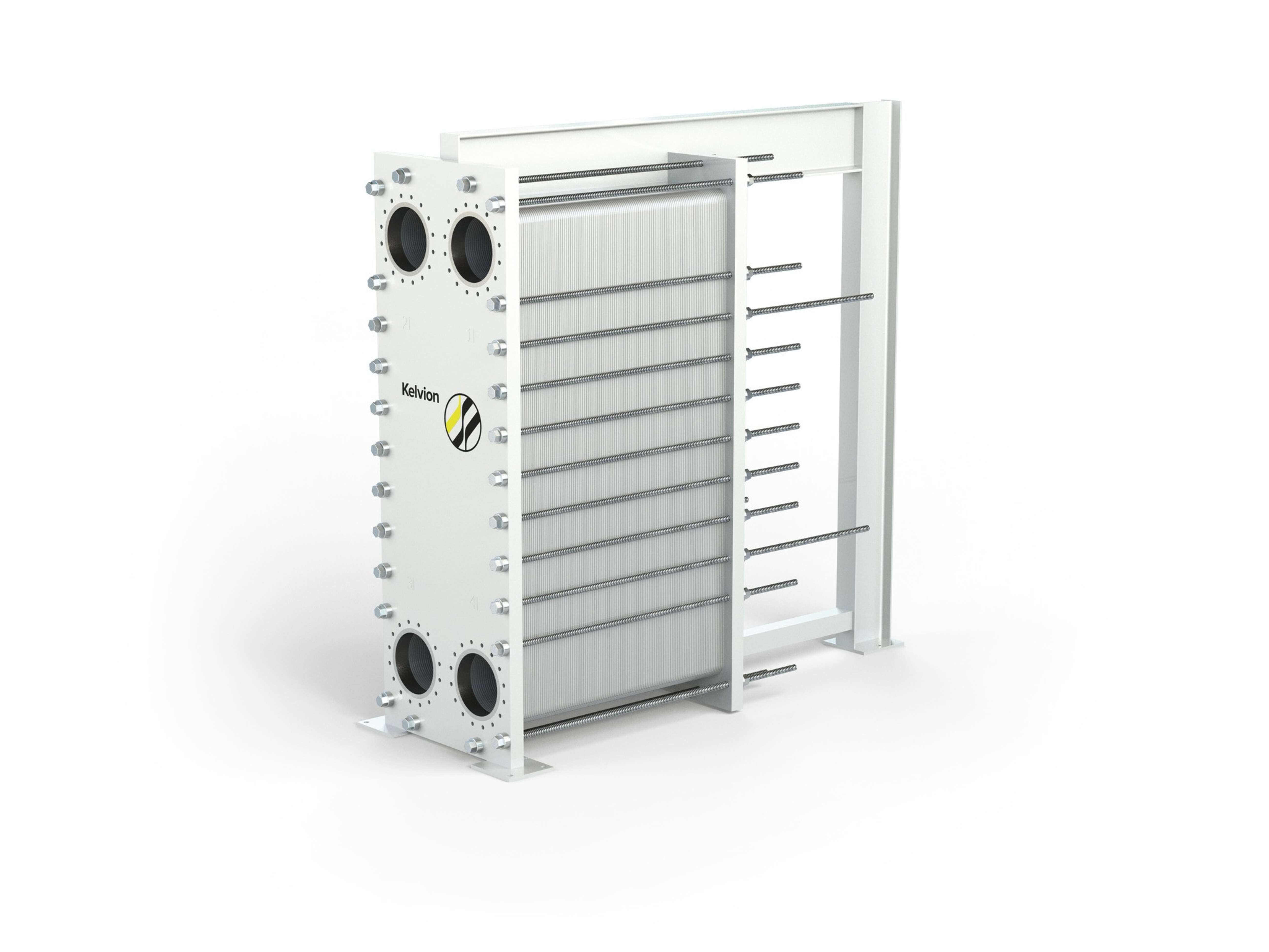
- A lean/rich heat exchanger preheats rich solvent and cools lean solvent to cut reboiler duty.
- Overhead condensation with reflux stabilizes the stripper before CO₂ drying and compression.

Heat exchangers reduce utilities and keep the process controllable by integrating heat across flue-gas, solvent and CO₂-conditioning sections.
- Flue-gas side: economizers/recuperators transfer heat to secondary circuits.
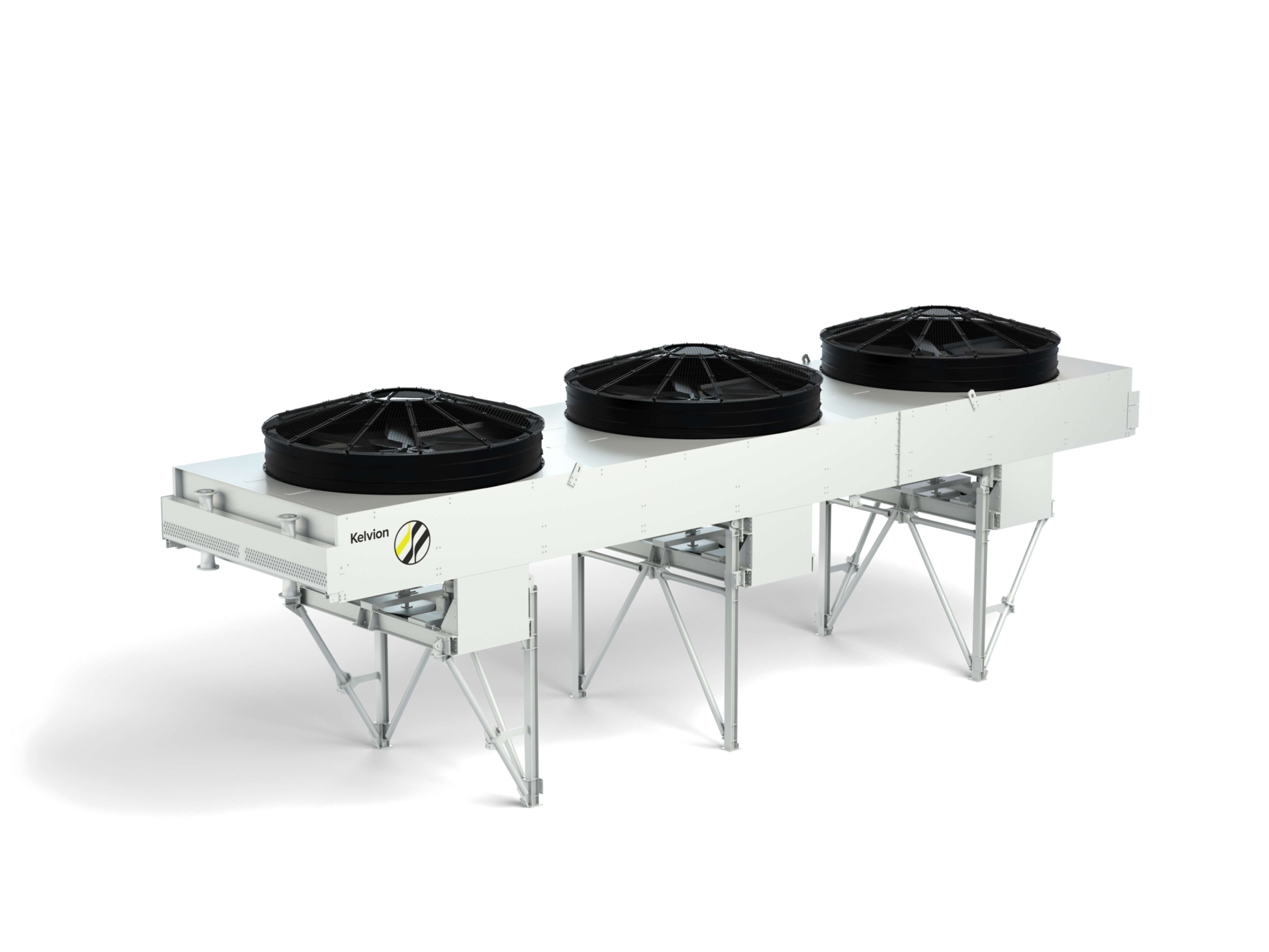
- Solvent loop: lean/rich exchange reduces steam demand; plate or air-cooled units handle solvent cooling.
- CO₂ train: inter/aftercoolers in compression manage temperatures and help dehydration.
FAQ – Carbon Capture
CO₂ conditioning prepares the regenerated stream to meet dryness, purity and pressure specs for pipeline, liquefaction or synthesis.
- The stripper overhead is condensed and partially returned as reflux.
- Polishing and dehydration protect downstream equipment and specifications.
Multi-stage compression with intercooling reduces power and controls discharge temperatures.
Review the post-treatment building blocks in K°Focus – Absorption Technologies
Desublimation is a cryogenic route in which CO₂ transitions directly from gas to solid on cold surfaces, avoiding additional solvents or sorbents.
- The approach is attractive when cold utilities are available (e.g., LNG contexts) and when very high product purity is required.
- Purpose-built low-temperature heat exchangers provide the cold duty and enable stable cycling.
See principle, steps and use cases in K°Focus – Desublimation
A desublimator alternates between loading, when solid CO₂ forms on cooled finned surfaces, and release, when controlled heating or pressure change frees the CO₂ for collection.
- Consistent performance benefits from moisture management, appropriate channel geometry and repeatable thermal cycles to manage pressure drop and duty.
Dive into the cycle and equipment notes in K°Focus – Desublimation
Desublimation is preferable where cold utilities are readily available, chemical handling should be minimized, or very high CO₂ purity is targeted—subject to the site’s CO₂ concentration, impurity profile, utility levels and CAPEX/OPEX goals.
Assess conditions and advantages in K°Focus – Desublimation
A capture tower is a modular air-contactor for DAC that couples mass transfer with thermal management to remove CO₂ efficiently from ambient air.
- Counterflow maximizes contact efficiency; crossflow simplifies access and can lower air-moving energy.
- Configurable fill/packing balances pressure drop, droplet control and contact time across climates.
Explore layouts and scaling in K°Focus – Capture Tower Technologies
The tower passes air through structured packing or contact media while a solvent or sorbent captures CO₂, then routes the medium through regeneration and heat-recovery loops.
- Air pre-conditioning (cooling/dehumidification where needed) and regeneration heat recovery are handled by heat exchangers.
- Modular, stackable sections allow capacity to grow from pilot to commercial scale with consistent operability.
Compare counterflow vs. crossflow and modular options: K°Focus – Capture Tower Technologies
Carbon-capture projects benefit from early expert input on route selection, tower layout and heat-exchange integration to reduce OPEX and de-risk scaling.