What is a plate heat exchanger? - FAQ
By definition, a plate heat exchanger (PHE) is a compact and efficient thermal device that transfers heat between at least two separate fluid streams via a series of thin, corrugated metal plates.
In this FAQ, you’ll find clear answers to all key questions about plate heat exchangers – from function and types to sizing, maintenance, and industrial applications.
How does a plate heat exchanger work?
A plate heat exchanger works on the principle of maximizing surface contact between two fluids to enable efficient heat transfer.
- Two fluids flow through alternate channels formed by a stack of thin metal plates.
- The fluids move in opposite directions (counterflow), which enhances thermal efficiency by maintaining a high temperature gradient across the heat transfer surface.
- Heat is conducted through the metal plates from the hot fluid to the cold one, without the fluids mixing.
- The corrugated structure of the plates promotes turbulence, improving heat transfer and minimizing fouling.
- The system is sealed using gaskets (in gasketed models), soldered(in brazed models), welding (welded designs) or diffusion bonded (in bonded design), depending on pressure, temperature, and maintenance needs.
This working principle makes plate heat exchangers highly efficient and compact solutions for industrial heating and cooling processes.
What is the function of a plate heat exchanger?
The primary function of a plate heat exchanger is to efficiently transfer heat between two fluids through convection and conduction. This is achieved by passing each fluid through alternate channels separated by thin metal plates. This function is critical in processes where temperature control, energy recovery, or thermal exchange is required without mixing the two media.
- Thermal separation: Fluids are kept in separate channels to avoid mixing.
- Heat transfer: Heat from the hotter fluid passes through the plate material and is absorbed by the cooler fluid.
- Turbulence and efficiency: Corrugated plates/channel patterns create turbulence, enhancing thermal performance and reducing fouling.
- Cost-effective and energy-efficient solution for heating or cooling
- Reduced energy consumption via waste heat recovery
- Precise temperature control for sensitive processes
- Wide applicability across sectors like food and beverage, chemicals, HVAC, power generation, marine systems and data centers
What are the different types of plate heat exchangers?
There are four main types of plate heat exchanger - each type is tailored for specific operational conditions and industry needs:
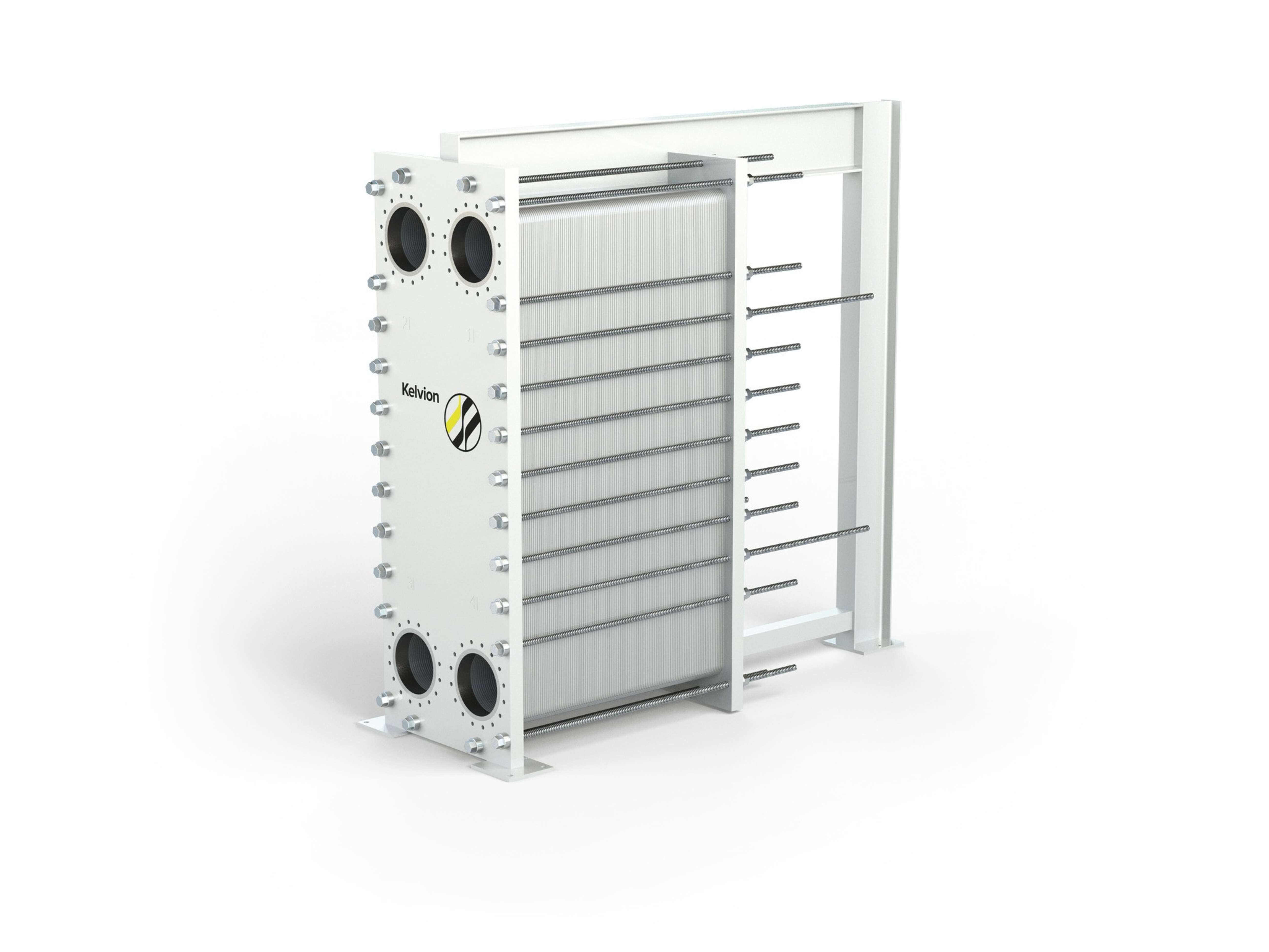
Gasketed Plate Heat Exchangers use elastomeric gaskets to seal the plates and direct the fluids into alternate channels. They are serviceable, making them ideal for industries requiring regular cleaning or plate replacement. They are adjustable and thus flexible solution, if process requirements change.
Brazed Plate Heat Exchangers are compact and sealed by brazing the plates together with a filler metal (usually copper). They are used in HVAC, refrigeration, data centers and compact industrial applications where maintenance is limited.
Welded Plate Heat Exchangers are designed for high-pressure, high-temperature, and aggressive fluids, these exchangers have plates welded together to prevent leaks and handle corrosive or toxic media.
Designed for extremely high‑pressure, low and high‑temperature applications, these exchangers are manufactured by diffusion bonding plates into a single solid metal core. The result is a fully welded, gasket‑free construction with exceptional mechanical strength and minimal risk of leakage.




What is the function of a plate heat exchanger?
The primary function of a plate heat exchanger is to efficiently transfer heat between at least two fluids through convection and conduction.
Each fluid flows through alternate channels separated by thin metal plates. The heat from the hotter fluid passes through the plate material and is absorbed by the cooler fluid. This function is critical in processes where temperature control, energy recovery, or thermal exchange is required without mixing the two media.
In industrial contexts, plate heat exchangers provide a cost-effective and energy-efficient solution for heating or cooling fluids. They help reduce energy consumption by recovering waste heat, maintaining optimal process temperatures and enabling precise thermal control. This makes them essential components in industries such as food & beverage, chemicals, HVAC, oil & gas, data center cooling and power generation.
What are the advantages of a plate heat exchanger?
Industrial plate heat exchangers offer a range of technical and economic advantages that make them ideal for demanding process environments. Their design ensures high performance, operational reliability and long-term efficiency across a broad spectrum of industrial sectors.
Key advantages include:
- High heat transfer efficiency due to large surface area and turbulent flow across corrugated plates/channels
- Compact and lightweight design, which saves space in plant layouts and skid-mounted systems
- Lower lifecycle costs compared to shell-and-tube heat exchangers, especially in terms of cleaning and energy use
These benefits make plate heat exchangers a cost-effective and energy-efficient solution for thermal processes in industries such as chemicals, HVAC, food and beverage, power generation, oil&gas, marine systems and data centers.
Gasketed Heat Exchanger
Industrial gasketed plate heat exchangers offer a range of technical and economic advantages that make them ideal for demanding process environments. Their design ensures high performance, operational reliability, and long-term efficiency across a broad spectrum of industrial sectors.
Key advantages include:
- High heat transfer efficiency due to large surface area and turbulent flow across corrugated plates
- Compact and lightweight design, which saves space in plant layouts and skid-mounted systems
- Modular construction, allowing capacity expansion by adding more plates or adaption to changed process conditions without replacing the entire unit
- Ease of maintenance, thanks to tool-free disassembly in gasketed models
- Lower lifecycle costs compared to shell-and-tube heat exchangers, especially in terms of cleaning and energy use
These benefits make gasketed plate heat exchangers a cost-effective and energy-efficient solution for thermal processes in industries such as chemicals, HVAC, food and beverage, power generation, marine systems and data centers.
Gasketed plate heat exchangers typically consist of stainless steel plates that are equipped with elastic gaskets such as NBR or EPDM. The selection of both plate and gasket material depends on the application, required corrosion resistance and operating conditions.
Plate materials
The heat transfer plates are most commonly made from stainless steel, which ensures high corrosion resistance, mechanical strength, and long‑term durability. Nickel-based alloys or titanium are used to ensure media compatibility for most demanding applications.
Gasket materials
NBR and EPDM are the most commonly used gasket materials, as they offer good media compatibility and price level. For challenging media or high design temperatures different FKM (Vitone) qualities or CR (Neoprene) are available. To fulfil regulatory requirements e.g. in food & beverage applications gasket materials with food approval are available.
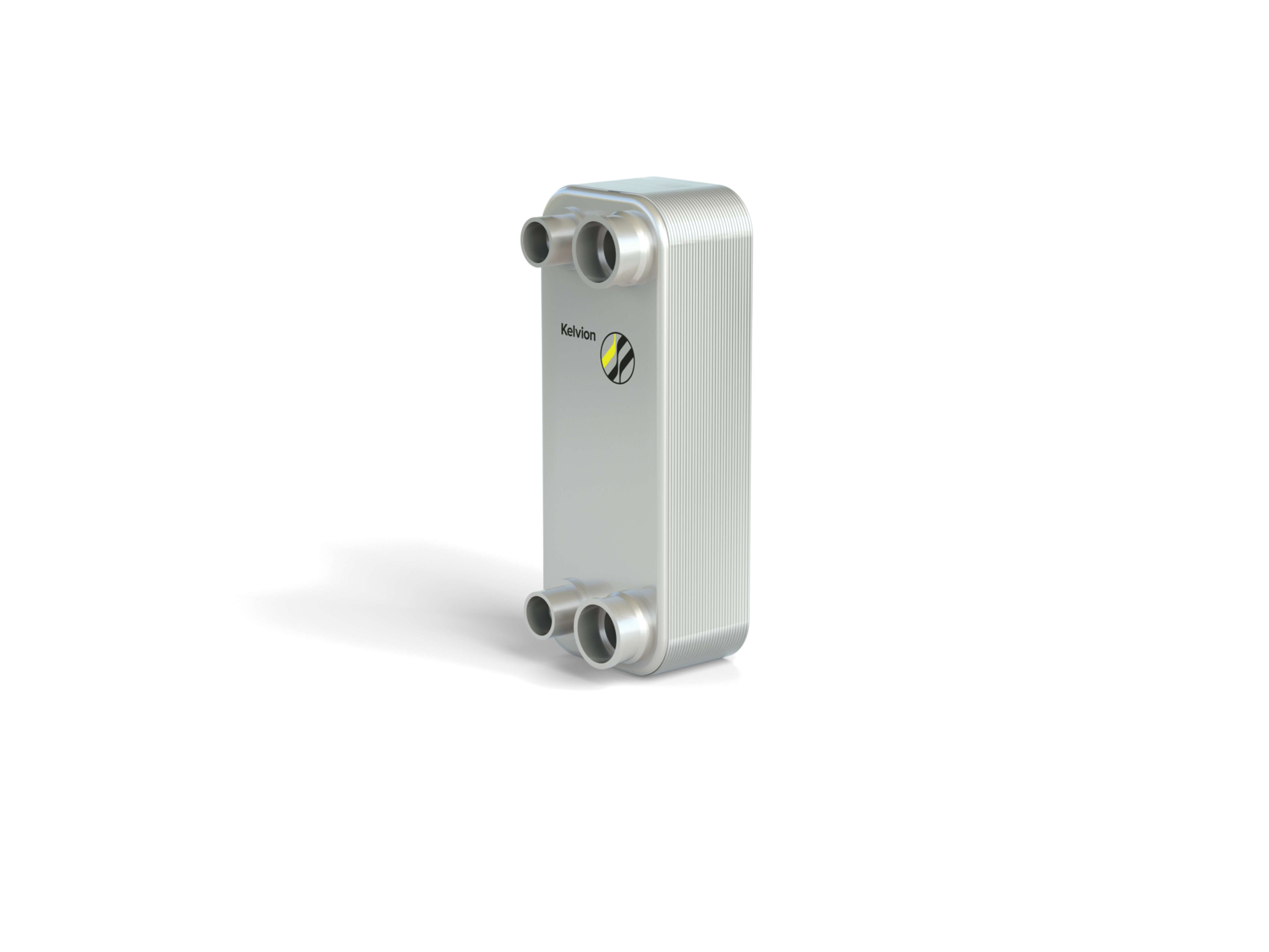
Brazed heat exchanger
Industrial plate heat exchangers deliver outstanding thermal performance combined with robust reliability, making them the ideal choice for demanding process environments. Their advanced design maximizes efficiency, reduces operating costs, and ensures long-term efficiency across a wide range of industries, all while keeping investment costs low.
Key advantages include:
- High heat transfer efficiency due to large surface area and turbulent flow across corrugated plates
- Compact and lightweight design, saving valuable space in plant layouts and skid-mounted systems
- Hermetically sealed construction, eliminating leakage risks and making them ideal for refrigeration and high‑pressure applications
- Lower investment and lifecycle costs compared to gasketed plate heat exchangers and a shell-and-tube heat exchangers, especially in terms of maintenance- free operation and investment cost
These benefits make brazed plate heat exchangers a cost-effective and energy-efficient solution for thermal processes in industries such as HVAC, refrigeration, heat pump, hot water applications, marine systems and data centers.
Brazed plate heat exchangers are typically constructed from stainless steel plates that are soldered together using a metallic brazing material. The selection of the brazing alloy depends on the application, required corrosion resistance, and operating conditions.
Plate materials
The heat transfer plates are most commonly made from stainless steel, which ensures high corrosion resistance, mechanical strength, and long‑term durability.
Brazing materials
A filler metal is applied between the plates to create a strong, hermetic bond:
- Copper as the most widely used brazing material is ideal for HVAC, refrigeration, and general industrial applications due to its excellent thermal conductivity.
- Other non-ferrous metals, such as nickelbased brazing alloys or Vacinox, a proprietary Kelvion development that is completely free of non‑ferrous metals,are used for aggressive media, higher temperatures, or cases where copper is unsuitable, such as chemical processing, ammonia refrigeration, drinking water applications, or marine environments.
What are the advantages of a welded plate heat exchanger?
Key advantages include:
- High heat transfer coefficient
- Suitable for critical operating conditions (high temperatures & pressures).
- Compact & flexible design
- Suitable for challenging application / aggressive media.
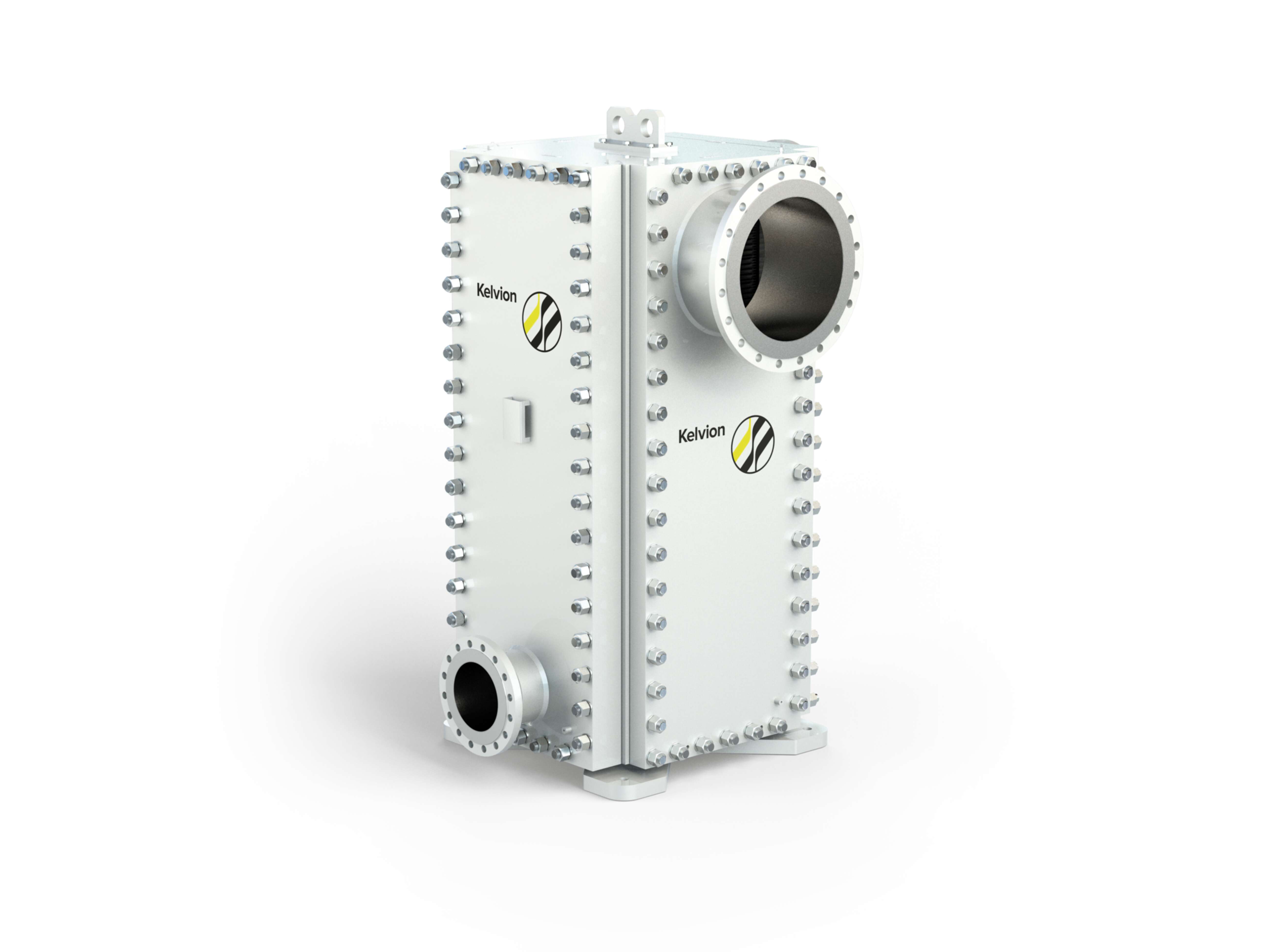
Diffusion bonded plate heat exchanger
Diffusion‑bonded heat exchangers (also known as printed circuit heat exchangers, PCHE) provide exceptional thermal efficiency combined with unmatched mechanical strength, making them the ideal solution for the most demanding operating conditions. Their solid‑state metallic construction enables reliable performance at extreme pressures and temperatures, while ensuring long‑term integrity and minimal leakage risk in safety‑critical processes.
Key advantages include:
- Very high heat transfer efficiency thanks to micro‑channel flow paths and intense turbulence, allowing effective heat exchange even with small temperature differences (till 2°C)
- High compactness and high power‑density design, significantly reducing footprint compared to shell‑and‑tube heat exchangers (up to 6 times smaller)
- Fully welded, monolithic construction without gaskets or brazing materials, ensuring maximum leak tightness and suitability for high‑pressure, low and high‑temperature, and hazardous media
- High mechanical strength, enabling operation under extreme pressure cycles and thermal stresses
These advantages make diffusion‑bonded heat exchangers a high‑performance and reliable solution for advanced industrial applications such as hydrogen processing, supercritical fluids, oil & gas processes, energy systems, and high‑integrity process industries.
Diffusion‑bonded heat exchangers are manufactured entirely from solid metal plates joined together through a diffusion bonding process under high temperature and pressure in a controlled atmosphere. Atoms diffuse across the plate interfaces, creating a solidstate metallurgical bond without melting or adding any foreign materials.
Plate materials
The heat exchanger core is typically produced from high‑grade metallic alloys selected according to the operating environment and process media:
- Stainless steels (e.g. austenitic or duplex grades) for general industrial, chemical, and high‑pressure applications
- Nickel‑based alloys for aggressive, corrosive, or high‑temperature environments
What is the difference between plate heat exchangers and shell and tube heat exchangers?
Plate heat exchangers and shell-and-tube heat exchangers are both used for transferring heat between fluids, but they differ significantly in design, efficiency, and application.
- Design: Plate heat exchangers consist of multiple thin metal plates stacked to form fluid channels, while shell-and-tube exchangers use a bundle of tubes inside a cylindrical shell.
- Thermal Efficiency: Plate heat exchangers offer higher heat transfer efficiency due to larger surface area and induced turbulence. Shell-and-tube models are typically less efficient but better suited for high-pressure or high-temperature applications.
- Footprint: Plate models are compact and require less space, making them ideal for facilities with limited installation area.
- Maintenance: Plate heat exchangers are easier to clean. Gasketed models can be expanded or adapted due to their modular design. Shell-and-tube exchangers require more effort and space for disassembly.
- Cost: Plate heat exchangers generally have a lower initial and maintenance cost for equivalent performance, especially in low- to mid-pressure applications.
- Use plate heat exchangers where space-saving, energy efficiency, and serviceability are priorities.
- Use shell-and-tube exchangers in high-pressure or high-temperature operations (if no space saving requirement), or where fluids contain particles or cause erosion
FAQ – Plate heat exchangers
Selecting and sizing the correct plate heat exchanger (PHE) involves balancing the requirements of the application with engineering calculations to achieve your thermal targets efficiently and reliably.
Selection criteria (application fit)
- Fluids & properties: media type, viscosity, solids, fouling tendency, chemical compatibility.
- Hydraulics: required flow rates and allowable pressure drop per circuit.
- Thermal targets: inlet/outlet temperatures, required ΔT, control stability.
- Heat duty: total Q = m × Cp × ΔT and expected part-load behavior.
- Constraints: available space, service clearances, cleaning strategy (CIP vs. mechanical).
Sizing steps (engineering)
- Calculate heat load & surface area using plate heat exchanger calculation formulas (e.g., Q = m × Cp × ΔT), then refine with LMTD/ε-NTU as needed.
- Select plate geometry & plate count to meet duty within the pressure-drop budget and desired approach temperature.
- Choose materials based on temperature and media.
- Plates (e.g., stainless/titanium)
- GasketsEPDM/NBR/FKM)
- Brazed: Copper, nickelbased brazing alloys or Vacinox
- Apply correction factors for fouling, material properties, and flow arrangement (counterflow, multi-pass).
- Validate with software or manufacturer engineering to ensure performance under real operating conditions.
Helpful calculation tools
- Use a web-based configurator/rating tool for plate heat exchanger selection and plate heat exchanger sizing (e.g., “Select PHE” for brazed and gasketed units). These tools guide configuration, run thermal calculations, and generate technical specs, calculation results, and submission-ready data sheets – often multi-language and suitable for a wide range of operating conditions.
- For diffusion bonded plates heat exchanger, contact Kelvion’s team (no configurator available)
Tip: Contact Kelvion’s engineering team for assistance with selection and sizing – reach us via the contact form.
Common design standards include:
- ASME Section VIII (Boiler & Pressure Vessel Code)
- EN 13445 (Unfired Pressure Vessels)
- PED (Pressure Equipment Directive)
- 3-A Sanitary Standard for food-grade equipment
Materials, welding, testing, and documentation are all dictated by these standards to ensure operational safety and regulatory compliance.
Plate heat exchangers are highly efficient due to their large surface area and counter-current flow design. Thermal efficiencies can reach up to 95%, which makes them superior to shell-and-tube exchangers in many applications. Their compact footprint combined with high performance helps reduce energy consumption and operational costs.
Effective cleaning and maintenance ensure high thermal performance, reduce energy use and unplanned downtime, and help to maintain safety and compliance.
- CIP (cleaning-in-place): CIP (cleaning-in-place) provides chemical circulation through the exchanger without dismantling, making it suitable for light to moderate fouling and short production stops.
- Intervals & triggers: Plan maintenance at regular intervals – for example, about every 36 months – to sustain efficiency, safety, and local compliance. Act sooner when differential pressure rises or the thermal approach worsens.
- Outcomes: Removing fouling and replacing damaged parts restores thermodynamic performance, reduces energy consumption, and helps maintain regulatory compliance. With proper planning, service can be completed with minimal disruption, often ahead of schedule.
Rely on Kelvion as your one-stop solution – we service and overhaul plate heat exchangers of all brands to minimize downtime and restore peak performance.
Effective cleaning and maintenance ensure high thermal performance, reduce energy use and unplanned downtime, and help to maintain safety and compliance.
- CIP (cleaning-in-place): CIP (cleaning-in-place) provides chemical circulation through the exchanger without dismantling, making it suitable for light to moderate fouling and short production stops.
- Manual/mechanical cleaning: Manual and mechanical cleaning provides an opened-unit approach in which plates are cleaned individually, making it appropriate for heavy deposits or when an internal inspection is required.
- Maintenance scope: A professional maintenance program combines mechanical cleaning with refurbishment/reconditioning of plate packs and the replacement of worn parts (e.g., gaskets or plates) to restore optimum efficiency.
- Intervals & triggers: Plan maintenance at regular intervals – for example, about every 36 months – to sustain efficiency, safety, and local compliance. Act sooner when differential pressure rises or the thermal approach worsens.
- Outcomes: Removing fouling and replacing damaged parts restores thermodynamic performance, reduces energy consumption, and helps maintain regulatory compliance. With proper planning, service can be completed with minimal disruption, often ahead of schedule.
Rely on Kelvion as your one-stop solution – we service and overhaul plate heat exchangers of all brands to minimize downtime and restore peak performance.
Effective cleaning and maintenance ensure high thermal performance, reduce energy use and unplanned downtime, and help to maintain safety and compliance.
For Brazed plate heat exchangers cleaning can be performed using CIP (Cleaning-in-Place) by circulating a suitable chemical solution, such as a mild acid for scale removal or an alkaline cleaner for oil, grease, chemicals or organic deposits, followed by thorough rinsing and neutralization.
Effective cleaning and maintenance ensure high thermal performance, reduce energy use and unplanned downtime, and help to maintain safety and compliance.
- CIP (cleaning-in-place): CIP (cleaning-in-place) provides chemical circulation through the exchanger which removes soiling by dissolving capacity of the cleaning medium and by the mechanical effect of turbulent flow.
- Manual/mechanical cleaning: Manual / mechanical cleaning is easy & reliable method by using jet spray water to clean the plate bundle.
To maintain proper performance and long‑term efficiency, heat transfer surfaces must be kept clean and suitable cleaning provisions should be available. The cleaning method should be selected by the operator based on the type of fouling, operating conditions, and available site facilities :
- High‑velocity circulation of warm cleaning oil or light distillates: Circulating warm cleaning oil or light distillates at high velocity can efficiently remove light contamination and loosely attached deposits.
- Warm water circulation: Certain salt or water‑soluble deposits can be removed by circulating soft, warm water.
- Back‑flushing: Reversing the normal flow direction may help dislodge and remove deposits accumulated in low‑velocity zones.
- High‑pressure water jet cleaning: High‑pressure water jets can be used for more robust mechanical cleaning where deposits are resistant to simple circulation methods. This technique is particularly effective for hard or compacted fouling.
- Chemical cleaning: Chemical cleaning involves circulating a heated chemical solution through the heat exchanger to dissolve fouling deposits. This method minimizes downtime and avoids disassembly of the unit.
Plate heat exchangers face a few recurring issues that affect reliability, efficiency, and uptime.
- Leaking gaskets and cracked plates are frequent failure modes. These issues can cause external leakage, cross-contamination between circuits, and unplanned downtime.
- Internal and external leakage. The likelihood, root cause, and corrective measures depend strongly on the design and sealing concept of the plate heat exchanger. Internal leakage is the cross-contamination between circuits. It can occur in all PHE types and is typically caused by gasket or plate damage, defective welds or brazed joints, material incompatibility or thermal cycling. External leakage is visible leakage to the environment and is mainly linked to the sealing concept:
- GPHE: gasket ageing, damage, misalignment, or incorrect tightening
- WPHE / Bloc / Flex/ KBond: weld defects, mechanical stress or thermal cycling
- BPHE: brazed joint failure due to corrosion, pressure peaks, freezing or thermal fatigue
- Fouling reduces heat transfer performance over time. Deposits increase pressure drop, raise energy consumption, and lower thermal capacity.
- Corrosion occurs when materials and media are incompatible. Inappropriate plate alloys or gasket compounds can lead to pitting, deformation, and premature failure.
Practical remedies
- Gaskets and damaged plates should be replaced promptly. Timely replacement restores sealing integrity and prevents cross-contamination.
- All operating conditions, especially cycling, must be considered during the design phase to check and adjust the mechanical design of the heat exchanger.
- Materials must match the operating media and temperatures. Selecting suitable plate alloys and gasket compounds (if any) mitigates corrosion and swelling.
- Inspections and cleaning should follow a defined schedule. Regular CIP or mechanical cleaning, combined with monitoring of differential pressure and thermal approach, helps detect problems early and maintain performance.
- Installation of filters upstream from the heat exchanger is also a preventive solution to avoid clogging and thus blockage of heat exchangers with smaller channels not designed to treat media with particles or fibres.
Plate heat exchangers face a few recurring issues that affect reliability, efficiency, and uptime.
- Leaking gaskets and cracked plates are frequent failure modes. These issues can cause external leakage, cross-contamination between circuits, and unplanned downtime.
- Fouling reduces heat transfer performance over time. Deposits increase pressure drop, raise energy consumption, and lower thermal capacity.
- Corrosion occurs when materials and media are incompatible. Inappropriate plate alloys or gasket compounds can lead to pitting, deformation, and premature failure.
- Blockages occur when particles, fibers or debris in the media build up inside the small flow channels. The result is clogging of flow channels reducing the flow and causing overheating or a completely blocked heat exchanger and unexpected downtime.
Practical remedies
- Gaskets and damaged plates should be replaced promptly. Timely replacement restores sealing integrity and prevents cross-contamination.
- Materials must match the operating media and temperatures. Selecting suitable plate alloys and gasket compounds mitigates corrosion and swelling.
- Inspections and cleaning should follow a defined schedule. Regular CIP or mechanical cleaning, combined with monitoring of differential pressure and thermal approach, helps detect problems early and maintain performance.
- Installation of filters upstream from the heat exchanger is also a preventive solution to avoid clogging and thus blockage of heat exchangers with smaller channels not designed to treat media with particles or fibers.
- Fouling and Scale Build-Up : Mineral deposits, sludge, or oils coat the channels, reducing heat transfer efficiency and increasing pressure drop.
- Clogging / Blocked Channels: Particles or debris in the fluid can block the narrow flow passages, leading to reduced flow and overheating.
- Leakage at Brazed Joints: Caused by thermal stress, pressure surges, freezing, or corrosion attacking the brazing material.
- Corrosion: Aggressive water chemistry (high chlorides, low pH, ammonia) can attack stainless plates or copper brazing, causing pinholes and failure.
- Thermal fatigue: Repeated extreme temperature cycling can induce micro-cracks in the brazed joints, especially in applications with frequent and rapid start/stop conditions.
- Freeze Damage: If water freezes inside the unit, the plates can deform or rupture because the exchanger cannot expand.
- Erosion from High Velocity: Excessive flow rates or abrasive particles can wear the plates and brazed seams.
- Incorrect Installation: Lack of strain relief, vibration, or misaligned piping can stress the compact unit and cause premature failure.
- Leakage from the panel sealing: This may happen due to incorrect tensioning of bolts, incorrect position of the gaskets, excessive load from pipe etc.
- Reduce heat transfer: This may occur due to deposition accumulated on heat exchanger plates.
Practical remedies
- Materials must match the operating media and temperatures. Selecting suitable plate alloys and panel gasket compounds mitigates corrosion and swelling.
- Inspections and cleaning should follow a defined schedule. Regular CIP or mechanical cleaning, combined with monitoring of differential pressure and thermal approach, helps detect problems early and maintain performance.
- Installation of filters upstream from the heat exchanger is also a preventive solution to avoid clogging and thus blockage of heat exchangers with smaller channels not designed to treat media with particles or fibres.
The main limitation of PCHEs is their tolerance to fouling/clogging making them suitable only for clean, well‑controlled fluids. To prevent fouling and channel blockage, adequate filtration must be installed upstream of the heat exchanger to remove particles and debris from the fluid.
Corrosion could also occur when materials and media are incompatible. Inappropriate plate alloys can lead to pitting, deformation, and premature failure.
Even with its fully bonded construction offering high mechanical resistance and tolerance to larger temperature differences, repeated or severe thermal cycling may cause cracks in the plates.
To obtain spare parts – including components for gasket and plate replacement – follow these steps:
- Identify the unit and parts precisely. Use the nameplate (model, serial) and plate/gasket codes to ensure exact fit and material compatibility.
- Request the OEM recommended spare parts list. Ask for a curated list with fixed pricing covering gaskets, plates and hardware sized to your maintenance plan.
- Leverage inspection-based checks. During periodic inspections, verify the list on site, adjust quantities to actual wear and confirm if gasket/plate replacement should be advanced.
- Secure availability for critical items. Keep gasket sets, selected plates, and key fasteners in stock to minimize downtime during planned or unplanned stops.
- Order genuine components or bundle via a service package. OEM parts preserve sealing integrity, thermal performance and compliance; service packages can include stocking and execution of the gasket/plate replacement.